
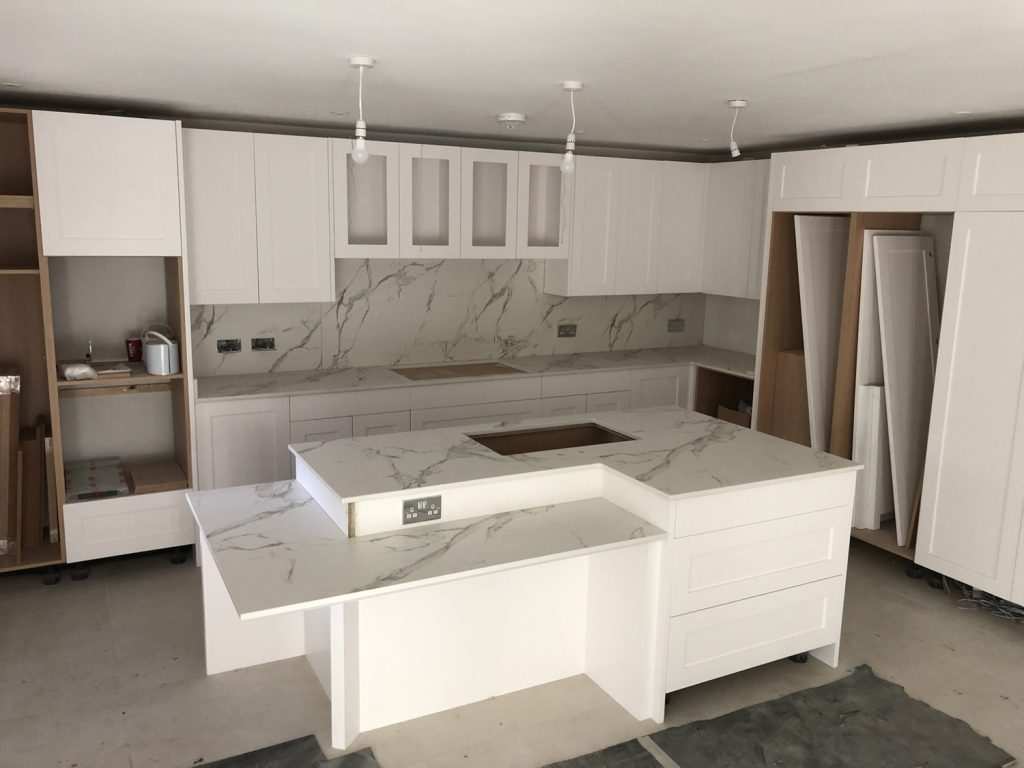
Pulling a kitchen together often hinges on how well the main surfaces relate to one another. When flooring, cabinets, splashbacks and worktops all head in different directions, the room can feel a little unsettled, no matter how expensive the materials are.
When they work in harmony, the whole space tends to look calmer and far more purposeful, even if the palette is fairly simple.
Many people discover during a renovation that choosing materials in isolation creates problems later on. A stone that looked perfect in the showroom may suddenly clash with cabinet paint or make the flooring appear dull.
Spending a little time considering how each element affects the others usually saves money, and it also helps you avoid that nagging feeling that something is “almost right” but not quite there.
Start with the Worktop as the Anchor
Stone worktops often set the visual tone because they carry natural veining, speckling or bold colouring.
That’s why it usually makes sense to pick the slab first. Once you know whether your stone is lively or understated, it becomes easier to judge what the surrounding finishes need to do.
A dramatic marble-style quartz, for instance, may benefit from softer, quieter choices around it so the room doesn’t feel overwhelmed.
It’s also worth considering the undertones in the stone, as these will guide every other choice.
Warmer stones with creams or golden flecks behave very differently from cooler greys and whites. Standing back and asking which colours appear repeatedly within the slab may help you build a palette that feels natural rather than forced.
Choosing Cabinet Colours That Work with Stone
Cabinetry has a huge impact on the overall look, and subtle shifts in shade can change how the stone reads.
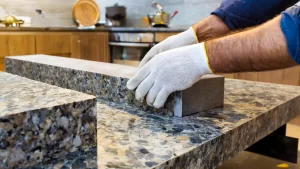
A warm-toned granite might sit comfortably beside light oak or muted cream paint, creating a cosy, welcoming feel. Cooler quartz surfaces often pair nicely with soft grey or slightly desaturated blue, which prevents the room from feeling cold while keeping the scheme coherent.
It’s easy to flatten everything by keeping the cabinets too close in shade to the worktop. When the colours almost match but not quite, the room can appear muddy.
Introducing a gentle contrast often gives the stone more breathing space, making the veining or pattern feel more intentional rather than accidental.
Flooring That Complements Without Competing
Flooring serves as the base layer of the kitchen, and it tends to influence the appearance of other materials. Timber-look floors can soften kitchens with crisp white or charcoal stone, adding warmth without feeling old-fashioned.
Large-format tiles, on the other hand, may work well in modern layouts because they create a clean backdrop that doesn’t distract from statement worktops.
It’s usually sensible to avoid heavily patterned flooring if your stone worktop already carries strong movement. Two bold surfaces often fight for attention, leaving the eye unsure where to rest.
Checking samples side by side, even if it feels tedious, is the quickest way to see whether the floor is helping or hindering the stone.
Matching or Contrasting Splashbacks
Splashbacks often act as the bridge between cabinets and worktops, so their job is more important than people expect.
Using the same stone as the worktop can create a streamlined, contemporary look, especially in smaller kitchens where too many different materials may feel cramped.
This approach can also highlight the natural veining, as the eye follows it from surface to wall.
Still, some homeowners prefer a gentle contrast. Metro tiles, slim porcelain panels or textured ceramics can break up a large expanse of stone and add a bit of personality.
A slightly reflective finish can lift darker worktops, making the area feel brighter without changing the core palette.
Balancing Texture and Finish
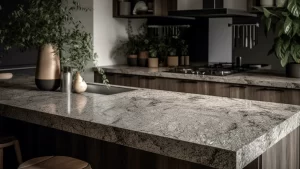
The finish of each element influences how they interact. A polished stone reflects more light and tends to feel more luxurious, while a honed or matte surface appears slightly softer.
Cabinets follow the same pattern: glossy paint may suit modern quartz, while a satin or matte finish usually feels more comfortable alongside natural stones.
Mixing a few textures can be charming, but piling on too many often makes the kitchen feel unsettled.
For example, pairing a polished marble-effect quartz with ultra-matte cabinets may create a pleasing contrast, but adding textured timber and patterned tiles on top may tip the balance. Keeping the number of textures controlled usually produces a calmer result.
Considering Natural and Artificial Light
Light changes everything. A stone that looks crisp and bright in daylight may appear unexpectedly heavy under warm evening lighting.
Checking samples at different times of day might feel overly cautious, but it often reveals which materials hold their character and which ones shift too much.
Darker stones can feel elegant, though they sometimes make shaded kitchens look smaller. Lighter surfaces may counter this, helping the room appear airier without requiring a full redesign.
Being aware of how each material behaves under your kitchen’s actual lighting can prevent disappointment later on.
Pulling Everything Together with Accents
Finishing touches often do more work than they’re given credit for.
Handles, taps, lighting fixtures and even stools can tie colours together in a subtle way. A brass tap might pick up golden flecks in a granite worktop, or a black handle may echo darker veins in a quartz surface.
These small links help the room feel coordinated without forcing every item to match perfectly.
Accessories are handy for bridging gaps when two major surfaces feel slightly at odds. A few well-chosen pieces in the right tone can make the palette appear intentional. It’s a simple trick, but it can make a surprising difference.
Final Thoughts
Finding balance in a kitchen isn’t about making everything match; it’s about choosing materials that behave well together.
A restrained palette, thoughtful contrasts and an awareness of how light affects the space usually lead to a result that feels naturally cohesive.
Experimenting with samples, testing combinations and noticing how each surface influences the others may take a little extra time, but it tends to produce a kitchen that feels settled and satisfying for years.