
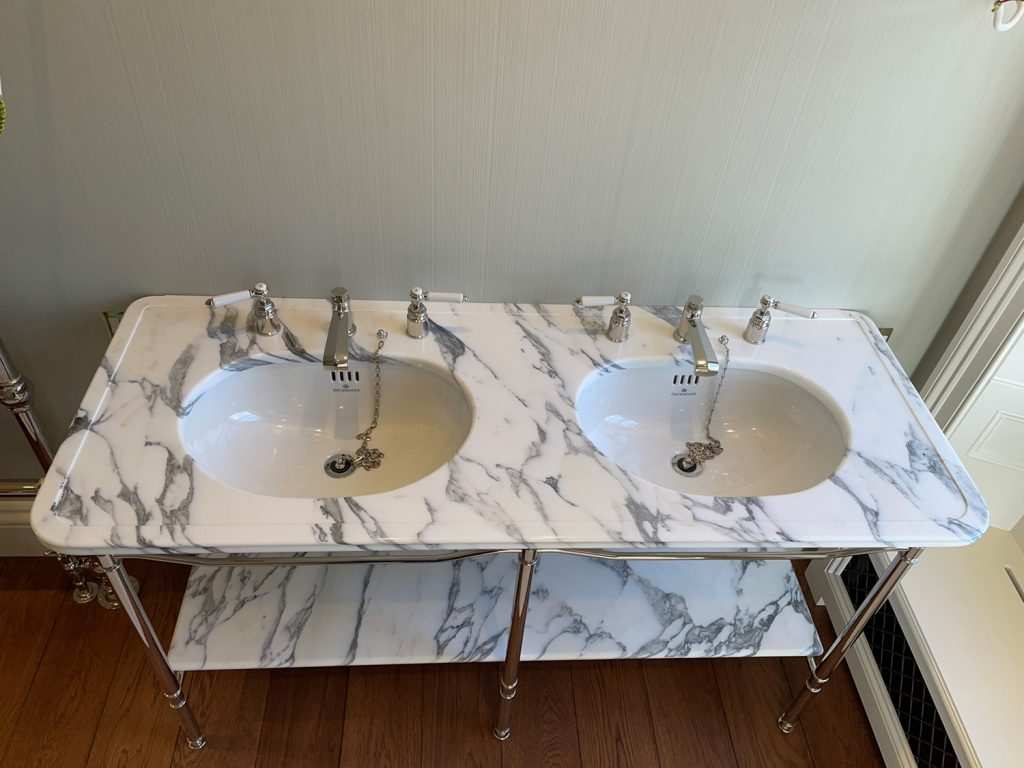
Stone worktops are usually introduced to a home through the kitchen. That makes sense; it’s where durability, hygiene and visual impact all matter. Yet once you start looking around a well designed house, it becomes clear that stone doesn’t need to stop at the cooker. In fact, some of the most interesting applications appear outside the kitchen altogether, where stone plays a quieter but arguably more refined role.
Used thoughtfully, stone surfaces can add structure, weight and longevity to bathrooms, living areas and even utility spaces. The key is knowing where it works best and where a lighter touch may be wiser.
Stone Worktops in Bathrooms: Practical Luxury
Bathrooms are an obvious next step for stone, although they demand a slightly different mindset. Moisture, temperature changes and cleaning products all come into play, which means material choice and finishing matter more than aesthetics alone.
When specified properly, stone offers a sense of permanence that ceramic or laminate often struggles to match. It can feel calm, understated and quietly luxurious rather than overtly showy.
Vanity Units and Floating Basins
A stone topped vanity unit is often the centrepiece of a bathroom. Whether it’s a simple slab resting on cabinetry or a floating surface with concealed fixings, stone brings a solidity that lighter materials lack.
Integrated stone basins are increasingly popular, particularly in contemporary spaces. They offer a seamless look, although they do require careful fabrication and a realistic approach to maintenance. In contrast, pairing a stone worktop with a ceramic or metal basin can soften the overall effect while retaining the benefits of a stone surface.
Shower Niches and Shelving
Stone doesn’t have to dominate a room to make an impact. Using it in shower niches, ledges or open shelving can subtly elevate a bathroom without overwhelming it. Matching the niche stone to the vanity top can create cohesion, while a contrasting finish may add interest without visual clutter.
These smaller applications also allow homeowners to enjoy the feel of stone while keeping cleaning and upkeep manageable.
Utility Rooms and Boot Rooms: Built for Daily Life
Utility spaces rarely receive the same design attention as kitchens or bathrooms, yet they often see the most wear. This is where stone arguably earns its keep.
A stone worktop in a utility room or boot room copes well with damp coats, muddy boots, detergents and constant use. It’s less about luxury here and more about longevity. Porcelain and quartz surfaces are particularly well suited, as they offer consistency and resilience without demanding frequent sealing.
In homes with pets, stone surfaces around washing stations or feeding areas can also be a practical choice, as they clean easily and resist staining.
Stone in Living Spaces: Subtle Structure
Living rooms might seem an unlikely home for worktops, but stone has long played a role here, just not always in obvious ways. Used sparingly, it can anchor a space without making it feel cold.
 Fireplace Surrounds and Hearths
Stone fireplaces remain a classic for good reason. They handle heat effortlessly and age gracefully, often improving in character over time. In modern interiors, clean lined stone hearths can provide contrast against softer furnishings, while more traditional finishes suit period properties equally well.
The choice between a bold, veined stone and a quieter, uniform surface often comes down to how much attention the fireplace should command.
Window Seats, Shelving and Media Units
One of the more creative uses of stone is in bespoke features such as window seats or low shelving. A stone window seat, for example, can frame a view beautifully while offering durability that timber sometimes lacks.
Similarly, stone shelves or media units can introduce a sense of balance and weight, particularly in open plan spaces where furniture needs visual grounding. These elements tend to work best when kept simple, allowing the material itself to do the talking.
Creating Flow Across Multiple Rooms
Using stone in more than one room can create a strong sense of continuity, but it requires restraint. Repeating the same slab everywhere may feel heavy handed. Instead, many designers opt for variations on a theme.
The same stone might appear polished in a bathroom, honed in a utility room, and used sparingly as an accent in a living space. This approach maintains cohesion while avoiding repetition.
Practical Considerations Before You Commit
Stone is not a universal solution, and it’s worth acknowledging its limitations. Weight and structural support need careful planning, especially for floating installations. Thickness, edge profiles and support systems all affect both appearance and performance.
Maintenance expectations also vary. Natural stones may need periodic sealing, while engineered surfaces tend to be more forgiving. In some rooms, particularly where warmth or flexibility is key, alternative materials might still be the better option.
A Balanced Final Thought
Stone worktops no longer belong exclusively in kitchens. When used with intention, they can enhance bathrooms, living areas and practical spaces alike. The trick lies in understanding how each room is used and choosing materials accordingly.
Rather than applying stone everywhere, it’s often more effective to introduce it where it adds genuine value. Done well, these quieter applications may end up being the most rewarding ones of all.