
Stone Connection
Porcelain Worktops for Busy Family Kitchens: What to Know Before You Choose
A family kitchen has a habit of testing every surface in the room. One minute it is breakfast before school, the next it is a homework station, a coffee stop, a baking session or a place to drop shopping bags while somebody asks what is for tea. That is why choosing a worktop is rarely just about colour. It needs to look right, of course, but it also needs to cope with real life.
For households that want a crisp, modern finish without sacrificing practicality, porcelain-style surfaces are getting more attention for good reason. At Stone Connection, these surfaces sit alongside granite, quartz and marble as part of a broader worktop range, with options including Dekton, Neolith and Lapitec. If you are weighing up materials for a busy kitchen, here is what is worth knowing before you decide.
What people mean by “porcelain worktops”
In kitchen conversations, “porcelain worktops” often refers to a wider family of ultra-compact or sintered surfaces. They are designed to be hard-wearing, low-porosity and visually refined, often with finishes that mimic natural stone, concrete or softer contemporary tones. That makes them appealing to homeowners who like a cleaner-lined kitchen without the high-maintenance reputation some natural materials can carry.
Stone Connection’s porcelain and sintered options are not one generic product. Different brands bring different looks, finishes and technical qualities, which is why the early stages of material selection matter. A slab that looks perfect in a photo may feel completely different in person once you see the scale of the veining, the surface texture and the edge detail up close.
Short version: if your kitchen sees constant use, porcelain-style worktops are attractive because they combine a sharp visual finish with practical everyday performance. The right choice, though, depends on how your household cooks, cleans and uses the room.
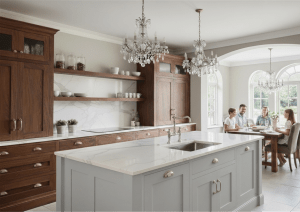 Why they suit busy households so well
The biggest appeal is usually ease. In a family kitchen, there is always something landing on the surface: juice, pasta sauce, coffee rings, lunchboxes, school letters or a saucepan that has just come off the hob. Porcelain and sintered surfaces are often chosen because they are easy to wipe down and designed to resist the day-to-day mess that builds up when the kitchen is genuinely lived in.
They also suit homes where design matters just as much as practicality. If you want slim lines, a cleaner contemporary look or continuity between kitchen worktops, splashbacks and even adjoining spaces, this category gives you plenty to work with. That is particularly useful in open-plan homes where the kitchen is always on show and the worktop has to function as part prep area, part visual centrepiece.
| Family kitchen priority | Why porcelain can help | What to think about |
|---|---|---|
| Fast clean-ups | Low-porosity surfaces are popular where spills are frequent. | Ask which finish best suits the amount of daily use. |
| Heat and cooking traffic | Many homeowners like this category for its strong heat performance. | Installation quality still matters around cut-outs and detail areas. |
| Modern styling | Slim, contemporary looks work well in open-plan kitchens. | See the slab in person before choosing from a screen. |
| Indoor-outdoor continuity | Some porcelain-style materials are well suited to spaces with lots of light or outdoor links. | Check the exact product specification for where it will be used. |
Where it pays to look beyond the brochure
The best material for a busy kitchen is not always the one with the longest list of technical claims. It is the one that fits the household properly. A family that cooks heavily every evening may care most about heat resistance and easy cleaning. Another may be more concerned with fingerprints, soft neutral tones or how the island looks from the living area.
That is where fabrication and planning come in. Even the strongest-looking surface needs careful thought around edge profiles, sink cut-outs, overhangs and the overall kitchen layout. Stone Connection’s process covers templating, fabrication and installation, which matters because the finished result is never only about the slab itself. It is about how precisely that slab is measured, cut and fitted into the room.
 It is also sensible to think honestly about the look you want long term. Some homeowners love the crisp consistency of sintered surfaces. Others still prefer the organic variation of natural stone. There is no universal winner. The better question is whether you want the kitchen to feel minimal and architectural, softer and more natural, or somewhere between the two.
How to narrow the choice between Dekton, Neolith and Lapitec
If you are already leaning towards porcelain-style worktops, the next step is usually not picking a brand name in isolation. It is comparing the look, finish and intended use of each option in the context of your kitchen. Dekton often appeals to homeowners focused on a highly durable, low-maintenance surface with a broad design range. Neolith is often considered where a refined ultra-compact finish is part of the brief. Lapitec can be especially appealing when buyers want a sintered stone feel with a distinctly mineral, design-led look.
For most households, the easiest way to make sense of those differences is to stop comparing screenshots and start comparing real samples. A visit to the Stone Connection showroom gives you a clearer read on tone, texture and scale than any online gallery can. What feels slightly cold on a laptop may look warm and elegant in natural light. A dramatic vein that seems perfect online may feel too busy once you imagine cereal bowls, school bags and everyday clutter around it.
Questions worth asking before you commit
Before making a final decision, it helps to ask a few practical questions. Will the worktop be part of a heavily used island? Do you want matching splashbacks or wall panels? Are there young children regularly using the breakfast bar? Do you want the same material to work elsewhere in the home, such as utility areas, bathrooms or even outdoor kitchen zones? The answers shape which finish and thickness will feel right.
- How much direct cooking, mess and clean-up will this surface deal with every day?
- Do you want a bold statement slab or something quieter that works with changing décor?
- Would seeing full slabs and samples in person change the decision?
- Are there layout details that need bespoke fabrication or careful edge planning?
- Do you want advice across the whole process, from material choice through to final fit?
Summary
Porcelain worktops can be an excellent fit for a busy family kitchen, especially when you want a surface that feels modern, practical and easy to live with. The key is not treating “porcelain” as one simple box to tick. The right result comes from choosing the right product, the right finish and the right fabrication approach for the way your household actually uses the room.
If you are weighing up options for a new kitchen, Stone Connection can help with material selection, showroom advice, templating and installation so the final choice works as well in everyday life as it does on the design board. You can get in touch here to start narrowing down the right surface for your home.