
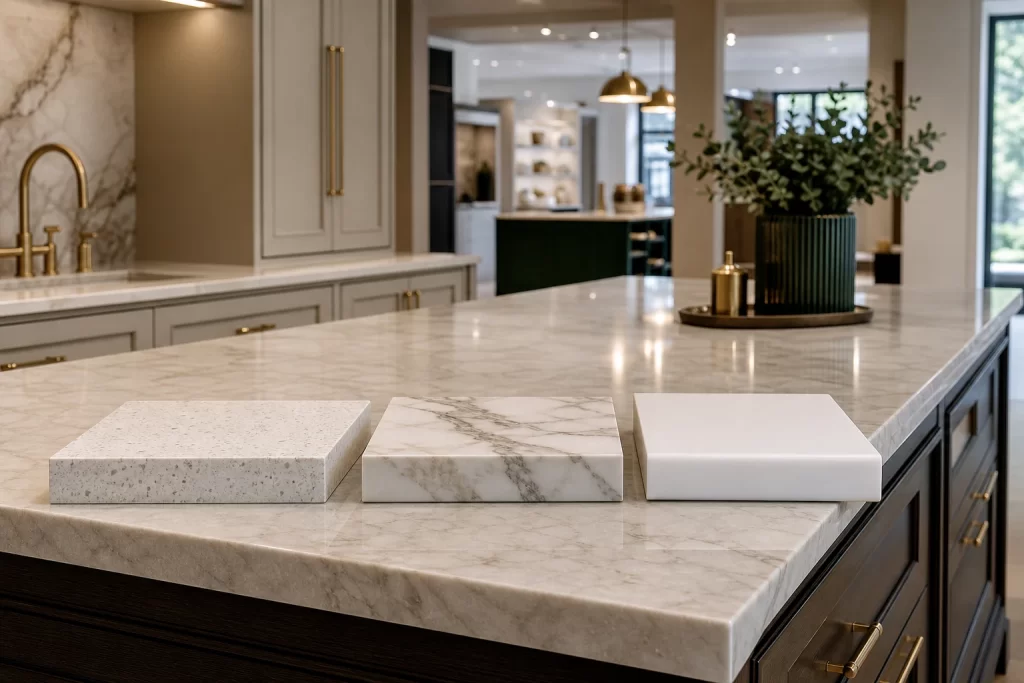
The edge of a kitchen worktop is easy to overlook until you see the finished surface in place. It changes the outline of the worktop, the way light catches the stone, and how comfortable the surface feels when you lean, cook or gather around it.
A good edge profile should suit the material, the cabinet style and the way the kitchen is used every day. This guide explains the most common options, how they look and feel, and what to consider before you make a final choice.
Why the edge profile matters
A worktop edge profile is the shaped finish applied to the exposed edges of the slab. It might be very simple, such as a small rounded pencil edge, or more decorative, such as an ogee with a shaped curve. The profile is usually chosen after the material and thickness, but it should never be treated as a minor detail.
The edge affects three main things. First, it influences the overall style of the kitchen. A crisp bevel can make a surface feel more contemporary, while a fuller rounded profile can feel softer and more traditional. Second, it affects touch and comfort. This matters at breakfast bars, islands and places where people naturally rest their hands. Third, it can help the worktop feel balanced with cabinet doors, handles, splashbacks and appliances.
For stone, quartz and solid surface worktops, the edge also needs to respect the material itself. Some profiles show thickness and veining more clearly. Others create a slimmer line, which can be useful in a pared back scheme. If you are still comparing materials as well as edge options, Stone Connection’s guide to choosing natural stone worktops is a useful companion.
The main worktop edge profiles
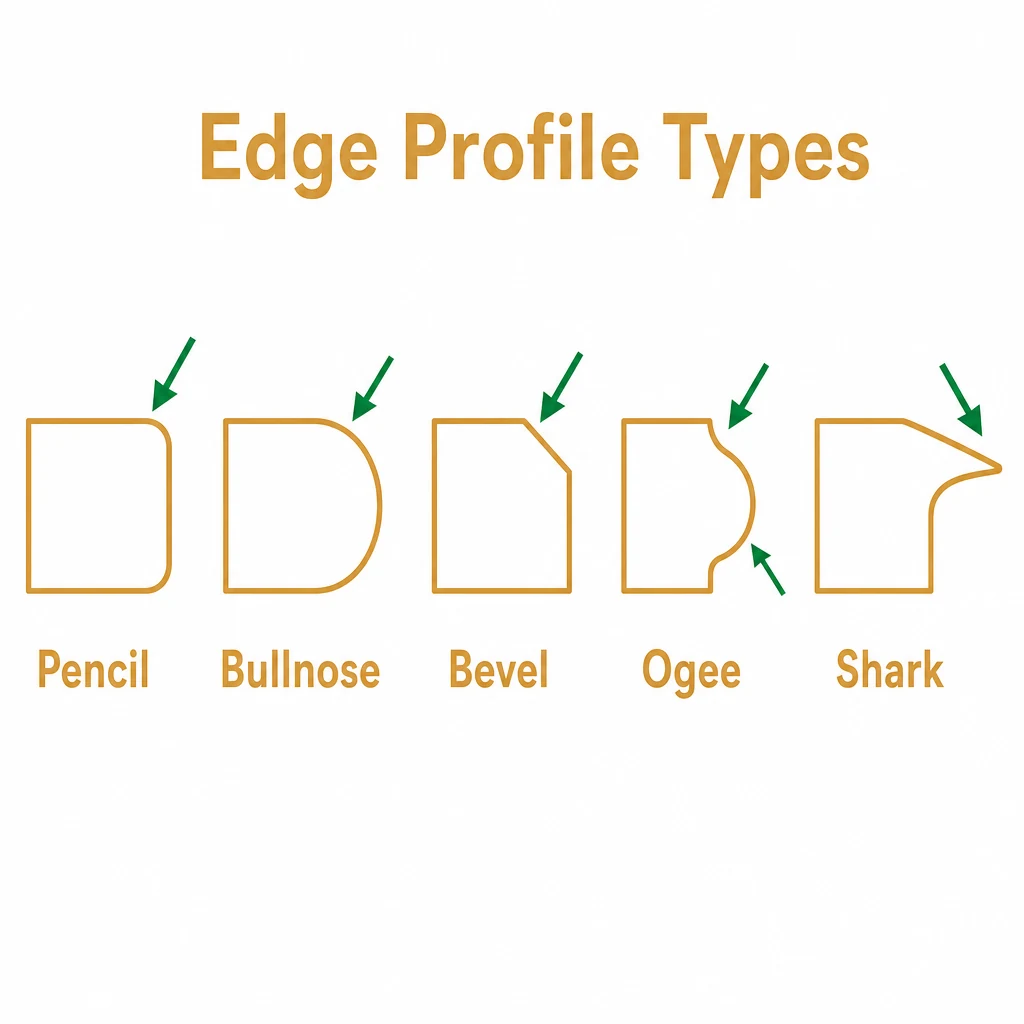
Most kitchens use a small group of proven edge profiles. Each has its own character, but the best choice is usually the one that quietly supports the design rather than demanding attention.
- Pencil round: A pencil round edge has a small, neat radius at the top and often a light radius underneath. It is one of the most versatile choices because it softens the edge without making the worktop look ornate. It suits modern and classic kitchens, works well on islands and feels comfortable in daily use.
- Bullnose: A bullnose has a much fuller curve, often rounded from top to bottom. It gives the worktop a softer outline and can be a good choice where comfort is a priority. Because the edge is rounded, it can feel gentle at seating areas and family kitchens. It usually looks best when the rest of the kitchen has some warmth or traditional detailing.
- Bevelled: A bevelled edge has an angled cut, usually along the top edge. It creates a clean line and catches light in a controlled way. The result is sharper than a pencil round but still practical. A small bevel can work beautifully in contemporary kitchens where the aim is crisp detail without a hard, square feel.
- Ogee: An ogee edge has a more decorative curve, usually with an S shaped detail. It is often chosen for kitchens with framed doors, statement islands or more classical design cues. It can add a sense of craftsmanship and depth, especially on stone with visible movement. It needs enough visual space around it, so it tends to suit larger surfaces better than very compact runs.
- Shark nose: A shark nose edge slopes back underneath the top edge, giving the surface a thin, floating appearance from certain angles. It is a strong option for sleek kitchens and handleless cabinetry. It can make a thicker slab look visually lighter while keeping the strength and presence of the material.
How material and thickness influence the choice
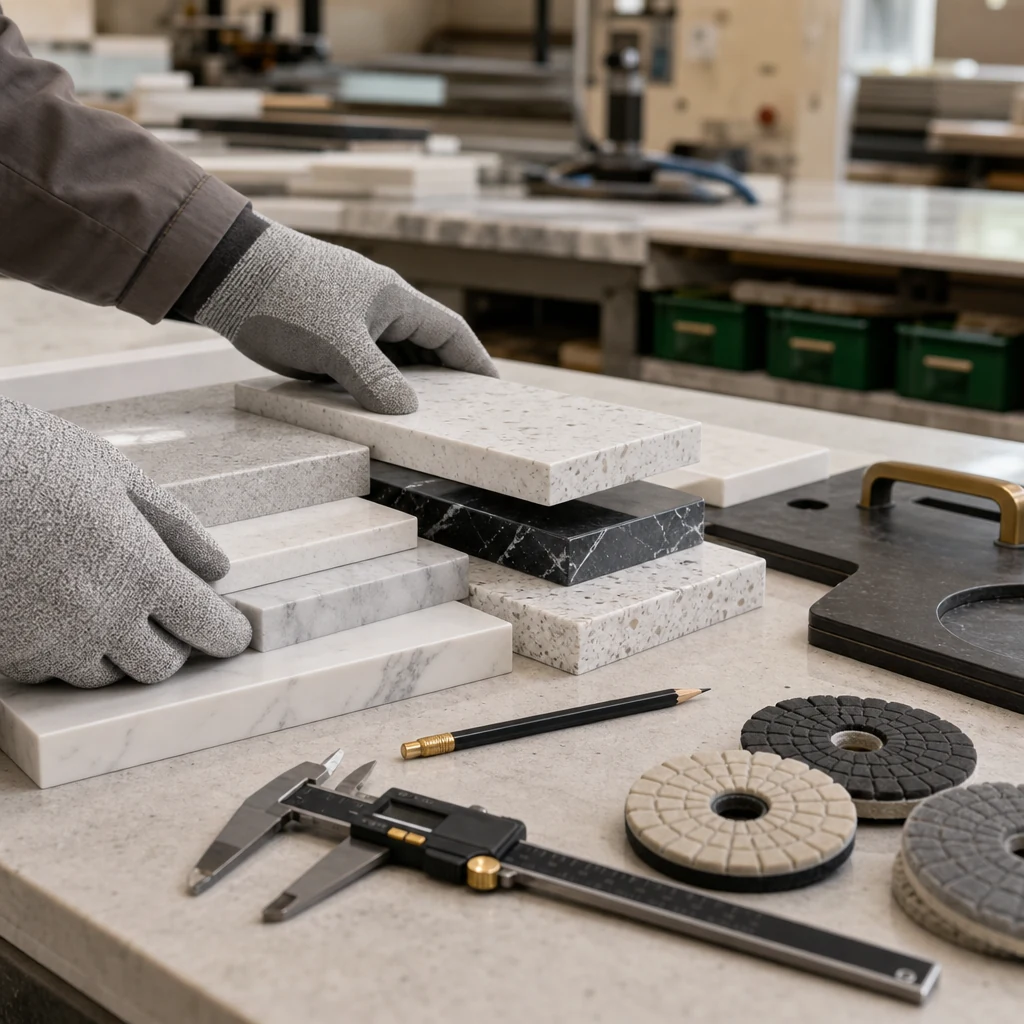
The same edge profile can look different depending on the worktop material. Granite, marble, quartz and solid surface materials each respond to shaping in their own way, so it is worth seeing samples rather than choosing from names alone. A pencil round on a fine grained quartz may feel understated and precise, while the same profile on a dramatic natural stone may let the veining remain the main feature.
Thickness also matters. A thicker worktop can carry a more pronounced edge, while a slim surface often looks better with simpler detailing. Decorative profiles need enough depth to show their shape properly. Very fine profiles can look elegant, but they should still feel robust enough for the way the kitchen will be used.
Natural stone can be especially rewarding when the edge reveals the body of the slab. If you are considering granite for its durability, texture and individual character, Stone Connection’s granite worktops information explains more about the material and installation process. For a deeper look at shaped finishes, their article on worktop edge profiles and finishes covers related customisation points.
Choosing an edge for your kitchen style
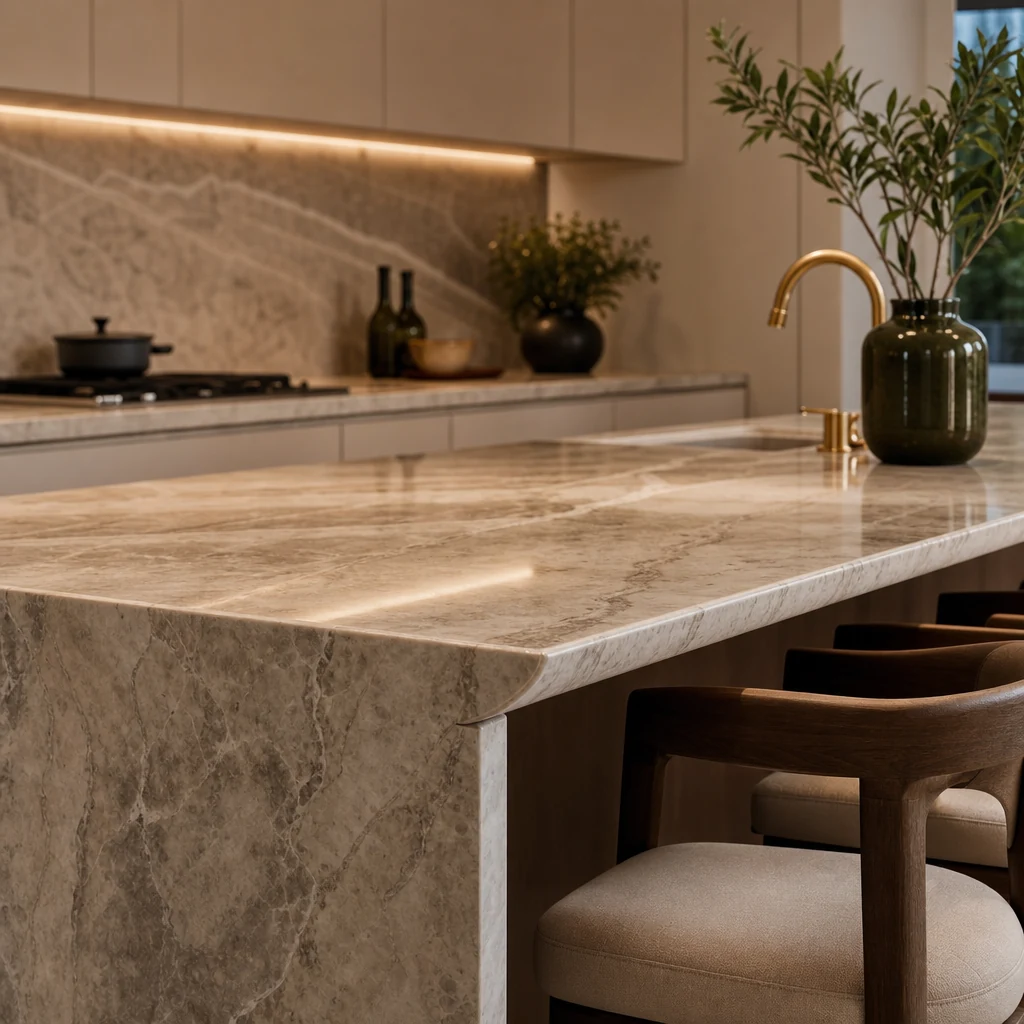
Start with the style of the cabinets. Flat slab doors, handleless runs and simple drawer fronts usually pair well with pencil round, small bevelled or shark nose edges. These profiles keep the lines clean and allow the worktop material to feel refined rather than busy.
For shaker style doors, painted cabinetry or kitchens with more traditional joinery, pencil round, bullnose and ogee edges can all work well. The decision comes down to how formal you want the room to feel. Pencil round keeps things relaxed and flexible. Bullnose adds softness. Ogee gives a stronger decorative finish and can make an island feel more like a furniture piece.
In a kitchen that mixes old and new details, a simple edge is often the easiest bridge between styles. A small bevel or pencil round can sit comfortably beside classic cabinets, modern appliances and natural stone patterning. If the worktop has bold veining, a quieter edge usually lets the material do the work. If the stone is more subtle, a shaped edge can add interest without changing the whole design direction.
Practical questions to ask before deciding
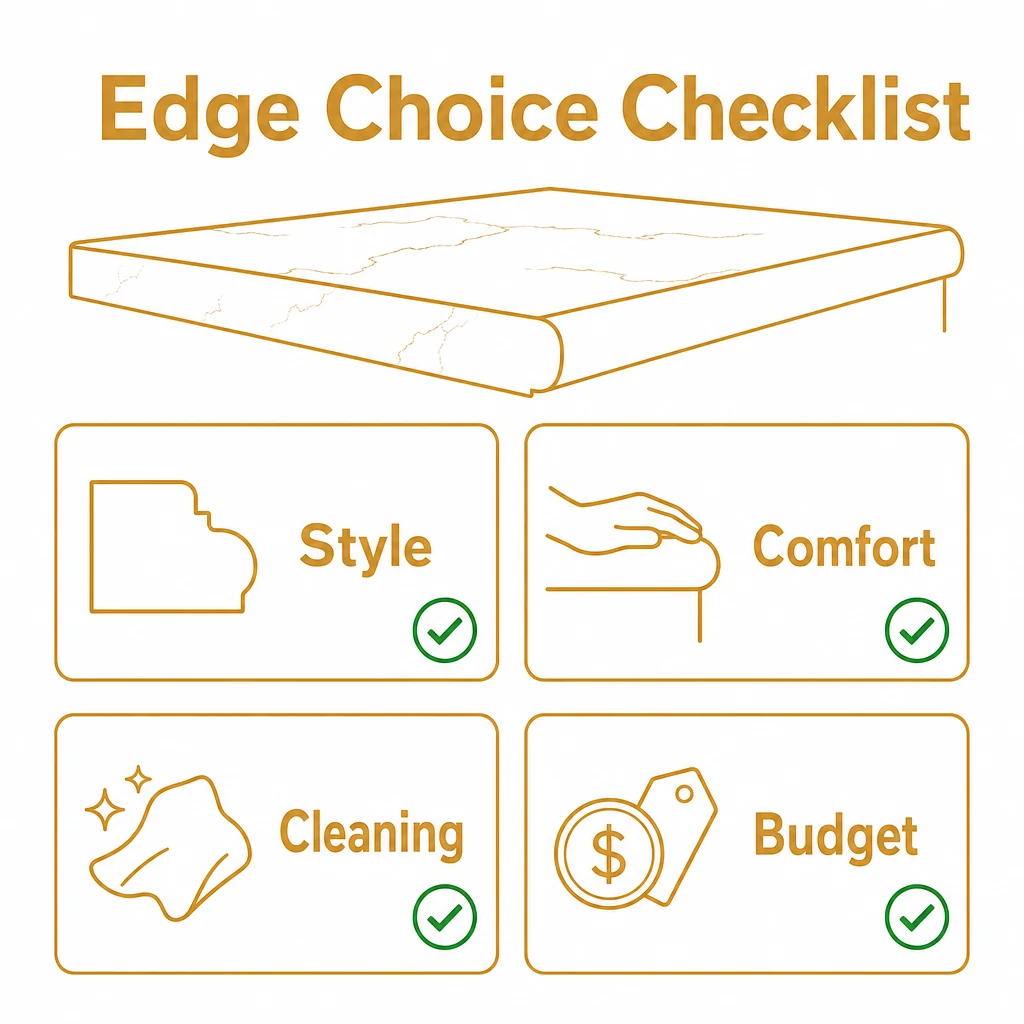
The best edge profile is not only about appearance. Think about the areas where the worktop will be touched most often. Seating areas, islands, peninsulas and sink runs benefit from edges that feel pleasant under the hand. If people will sit close to the worktop, a slightly softened profile can make a noticeable difference.
Cleaning is another practical point. Simpler profiles are generally straightforward to wipe because there are fewer grooves or shadow lines. More decorative profiles can still be very usable, but they reward regular care. This is especially relevant around preparation zones, sinks and busy family areas.
Also consider overhangs, cabinet layout and appliance positions. A shaped edge can look different where it meets a waterfall end, upstand, curved cabinet or undermounted sink. These details are usually resolved during templating, but it helps to talk through them early. A good template and fitting process allows the edge to be planned around the real kitchen, not just a showroom sample.
Finally, ask to see the profile on the same or similar material where possible. Small samples help with comparison, but a larger finished piece gives a better sense of shadow, polish and proportion.
A simple way to narrow your choice
If you are unsure, reduce the decision to three questions. Do you want the worktop to look crisp, soft or decorative? Do you want the material itself to be the main feature, or do you want the edge to add character? Will the surface be used mainly for cooking, dining, entertaining or a mixture of all three?
For a crisp look, consider bevelled or shark nose. For a soft and adaptable finish, pencil round is a reliable choice. For extra comfort, bullnose is worth considering. For a more decorative statement, ogee may be the right fit. There is no single best profile for every kitchen, only the best match for the room, material and daily routine.
It is also worth trusting your reaction when you run your hand along a sample. Worktops are physical surfaces, not just visual ones. The edge you enjoy touching is often the one you will appreciate most once the kitchen is finished.
- Pencil round is a versatile, subtle option that suits many kitchen styles.
- Bullnose feels softer and can work well at islands, peninsulas and seating areas.
- Bevelled and shark nose profiles are strong choices for clean, contemporary kitchens.
- Ogee adds decorative detail and works best where the wider kitchen design supports it.
- Material, thickness, overhangs and everyday use should all guide the final decision.
Frequently asked questions
What is the most practical worktop edge profile?
A pencil round is often the most practical all round choice because it softens the edge, suits many materials and is easy to live with. A small bevel can also be very practical in a contemporary kitchen.
Are square edges a good idea for kitchen worktops?
A completely square edge can look sharp, but most worktops benefit from a tiny radius or bevel for comfort and resilience. This keeps the crisp appearance while making the edge nicer to touch.
Which edge profile is best for an island?
For islands, comfort and proportion matter. Pencil round, bullnose and ogee can all work, depending on the kitchen style. If the island has seating, choose an edge that feels comfortable under the hand and does not look too heavy.
Should the edge profile match the rest of the kitchen?
It should complement the kitchen rather than match every detail. Simple profiles suit clean cabinetry and bold stone, while more shaped profiles can work well with traditional doors, statement islands and warmer design schemes.
Plan the right finish for your worktop
If you are choosing a new kitchen worktop, Stone Connection can help you compare materials, edge profiles and finishes so the final surface feels right in the room and in daily use.