
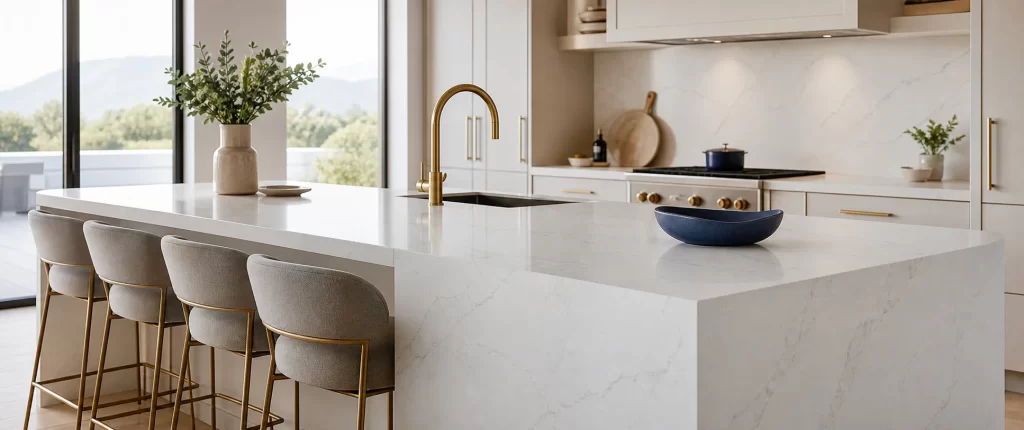
If you are comparing worktop materials, the language can get confusing quickly. Quartz, engineered stone, composite stone and natural stone are often discussed together, but they do not all mean the same thing.
Compac quartz is a good example. It has natural mineral content, a stone like finish and the practical advantages people often want in a busy kitchen, bathroom, bar top or table surface. So, is Compac quartz engineered stone? In simple terms, yes. The useful answer is a little more detailed.
What is engineered stone?
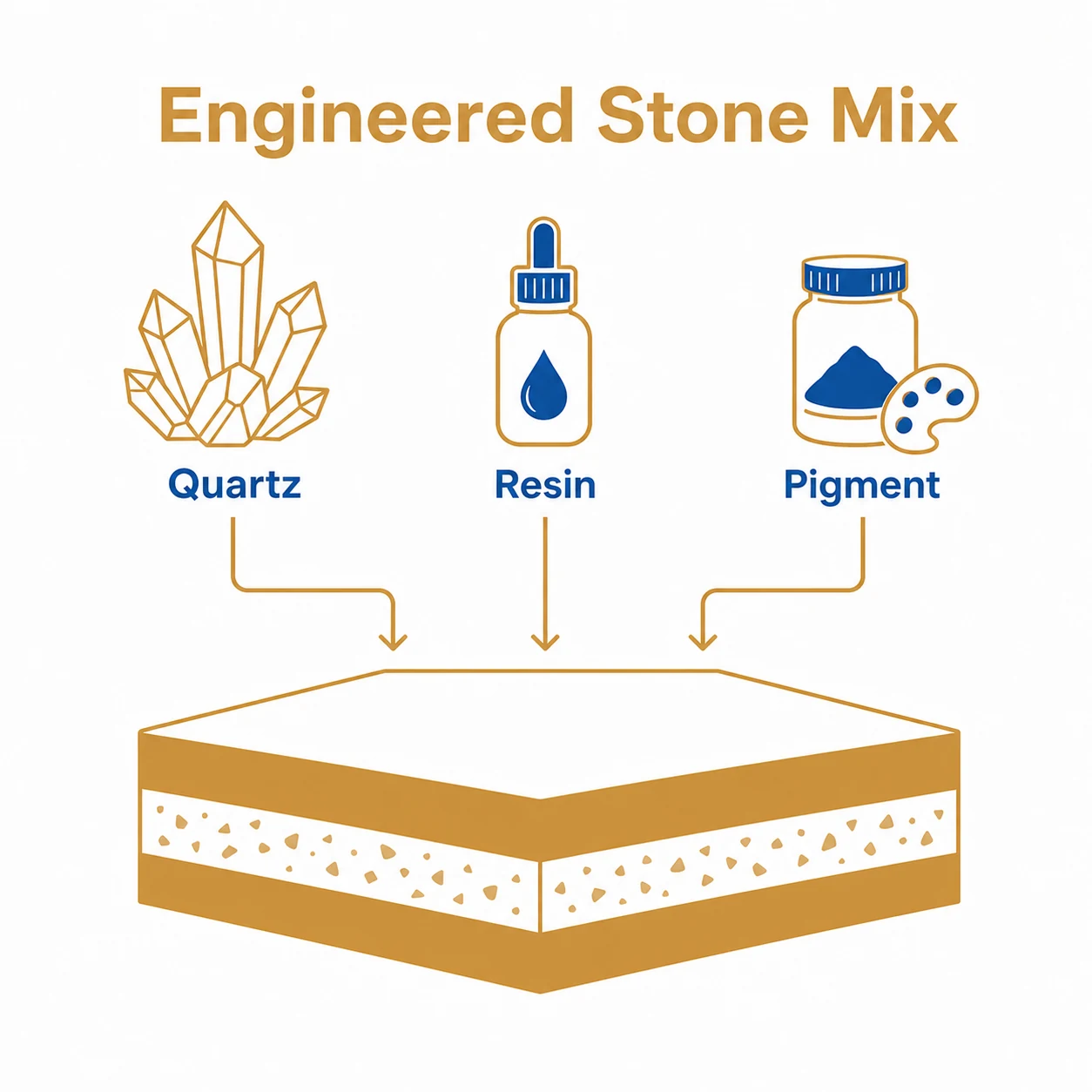
Engineered stone is a surface material made by combining natural minerals with binding agents and pigments. In quartz worktops, the main mineral is quartz, which is one of the hardest minerals commonly used in interior surfaces. The mineral content gives the slab strength and a stone like feel, while the resin and pigments help create consistency, colour choice and a non porous surface.
This is different from a slab of natural stone, which is quarried from the ground and cut into usable pieces. Natural stone is shaped and finished by people, but the pattern, colour variation and structure are formed by nature. Engineered stone is manufactured, which gives makers more control over appearance and performance.
That does not make one automatically better than the other. It means they suit different priorities. Natural stone is often chosen for its one off geological character. Engineered stone is often chosen for predictable design, strong day to day performance and simple care.
Where Compac quartz fits in
Compac quartz worktops are a type of engineered stone. Stone Connection describes Compac quartz as being made with 93 to 95 percent natural quartz, with small quantities of resin and pigments. That combination is what places it firmly within the engineered stone category.
The quartz content gives the material a naturally hard mineral base. The resin helps bind the surface together and removes the open porosity that you might need to consider with some natural stones. Pigments allow the finished slabs to be produced in a wide range of tones and patterns, from subtle designs through to dramatic marble inspired looks.
So, when someone asks whether Compac quartz is real stone, the fairest answer is that it contains a very high proportion of natural quartz, but it is not a natural stone slab in the same sense as granite or marble. It is an engineered quartz surface designed for interiors where appearance, strength and easier maintenance all matter.
Compac quartz compared with natural stone
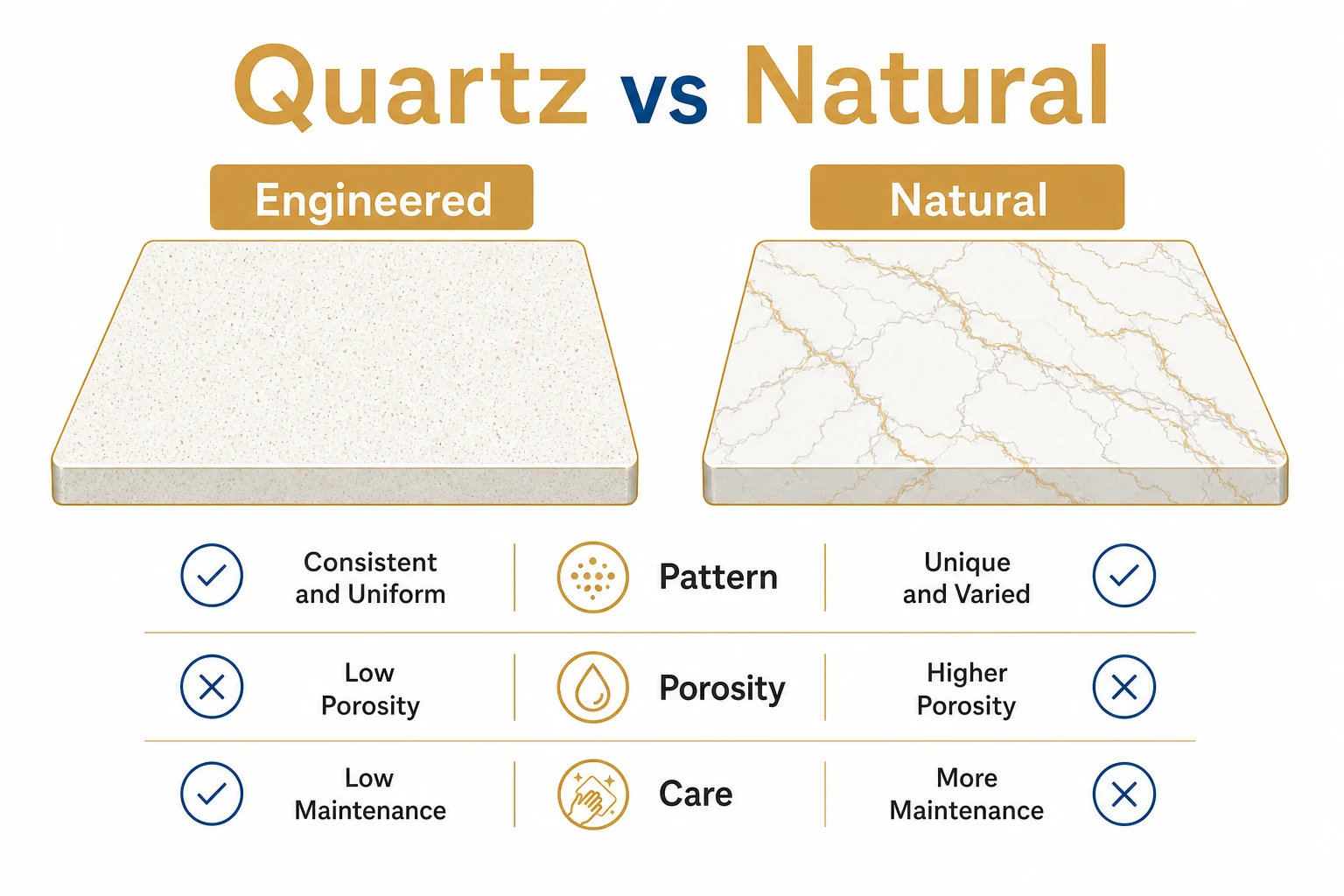
The biggest difference between Compac quartz and natural stone is how the surface is formed. Natural stone is cut from a block that already exists in nature. Every slab carries natural variation, including movement, veining, mineral deposits and sometimes small pits or fissures. Those details are part of its appeal, especially for people who want a surface that cannot be repeated exactly.
Compac quartz is produced in slabs, so the finished look is more controlled. There can still be movement and veining, particularly in designs made to echo marble, but the overall pattern and colour range are usually easier to plan around. This can be helpful when matching a kitchen island to surrounding worktops, choosing surfaces for several table tops, or aiming for a consistent finish across a commercial counter.
Care is another important difference. Some natural stones benefit from sealing because they can absorb liquid if left untreated or poorly maintained. Compac quartz is designed to be non porous, so it does not require sealing in the same way. That makes it appealing for spaces where spills, cleaning and regular use are part of normal life.
Heat and impact still deserve sensible treatment. Quartz is durable, but it is not indestructible. Hot pans should be placed on trivets, chopping should be done on boards, and heavy knocks on exposed edges should be avoided. Those habits protect the surface and help it stay looking its best.
Durability and everyday performance
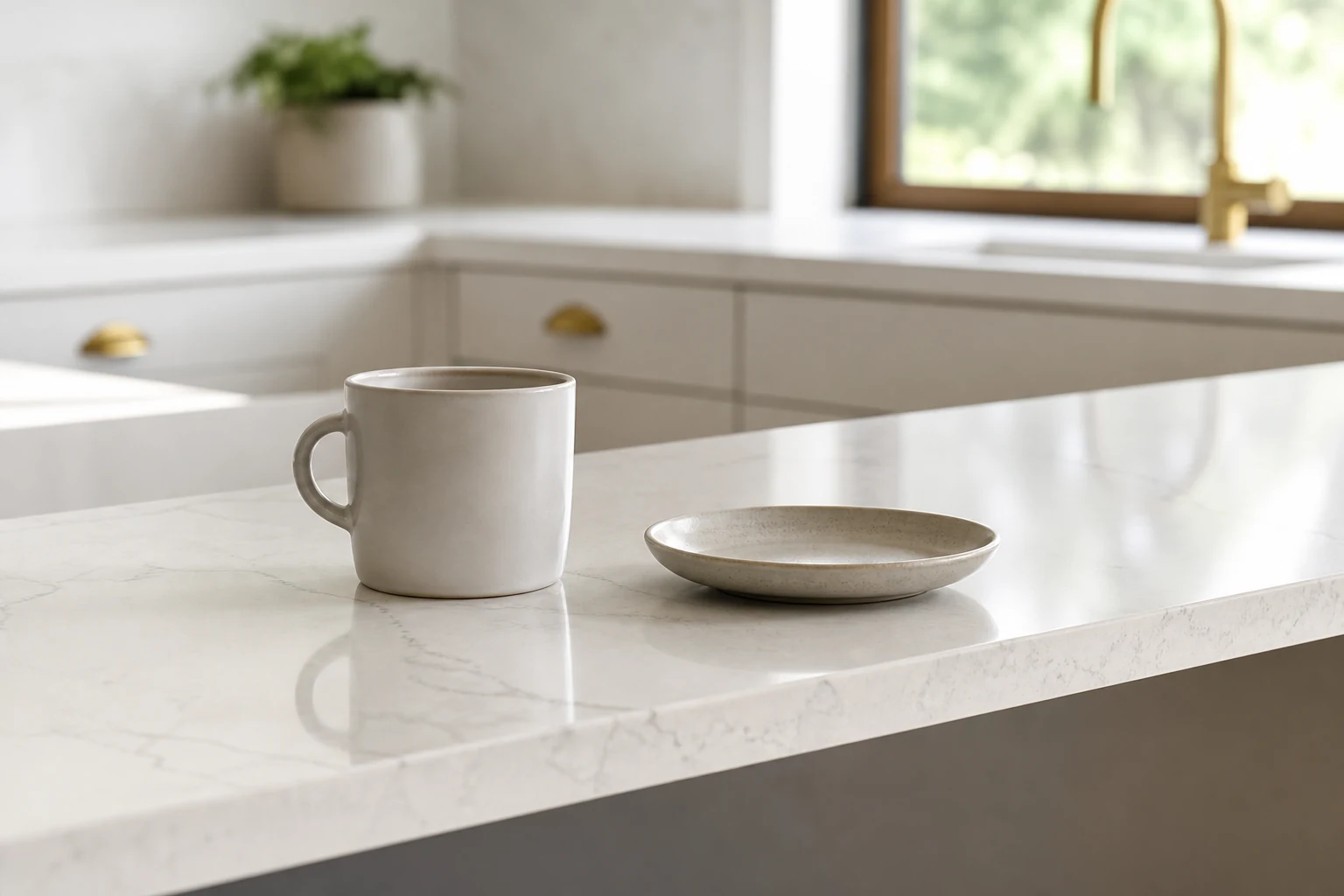
One reason engineered quartz is popular is that it gives a strong balance of beauty and practicality. Compac quartz is hard wearing, resistant to many common stains and suitable for worktops, table tops, bar tops, vanities, bathrooms and internal flooring or tiles, depending on the design and specification.
For kitchens, that means a surface that can cope with food preparation, drinks, cleaning and daily family use. For bars and hospitality interiors, it means a polished and professional finish that can handle regular contact. For bathrooms and vanities, the non porous nature is useful because the surface is less likely to absorb splashes from soaps, cosmetics or water.
It is still important to choose the right thickness, edge detail and finish for the way the space will be used. A large island, a compact utility worktop and a bar counter do not all ask the same things from a surface. Good templating and careful fitting matter as much as the material itself, because accurate joins, neat edges and secure support all affect the finished result.
Appearance and design choice
Compac quartz is often chosen by people who want the look of stone with more design control. Because it is engineered, there are options across plain colours, soft textures and bold veined designs. Some styles feel calm and minimal, while others bring stronger movement similar to marble.
This makes it useful when a room needs a particular mood. A pale quartz can make a smaller kitchen feel lighter and more open. A darker surface can add depth and contrast. A veined slab can become a feature without needing the natural unpredictability of marble.
The edge profile also changes the final effect. A simple square edge feels crisp and modern. A softened edge can feel more understated. Larger surfaces, such as islands and bar tops, often benefit from careful slab selection so that the pattern works with the layout rather than fighting it.
Samples are helpful, but they should be treated as a guide rather than the whole story. A small piece can show colour and texture, while a larger slab view gives a better sense of movement, scale and pattern repeat.
How to care for Compac quartz
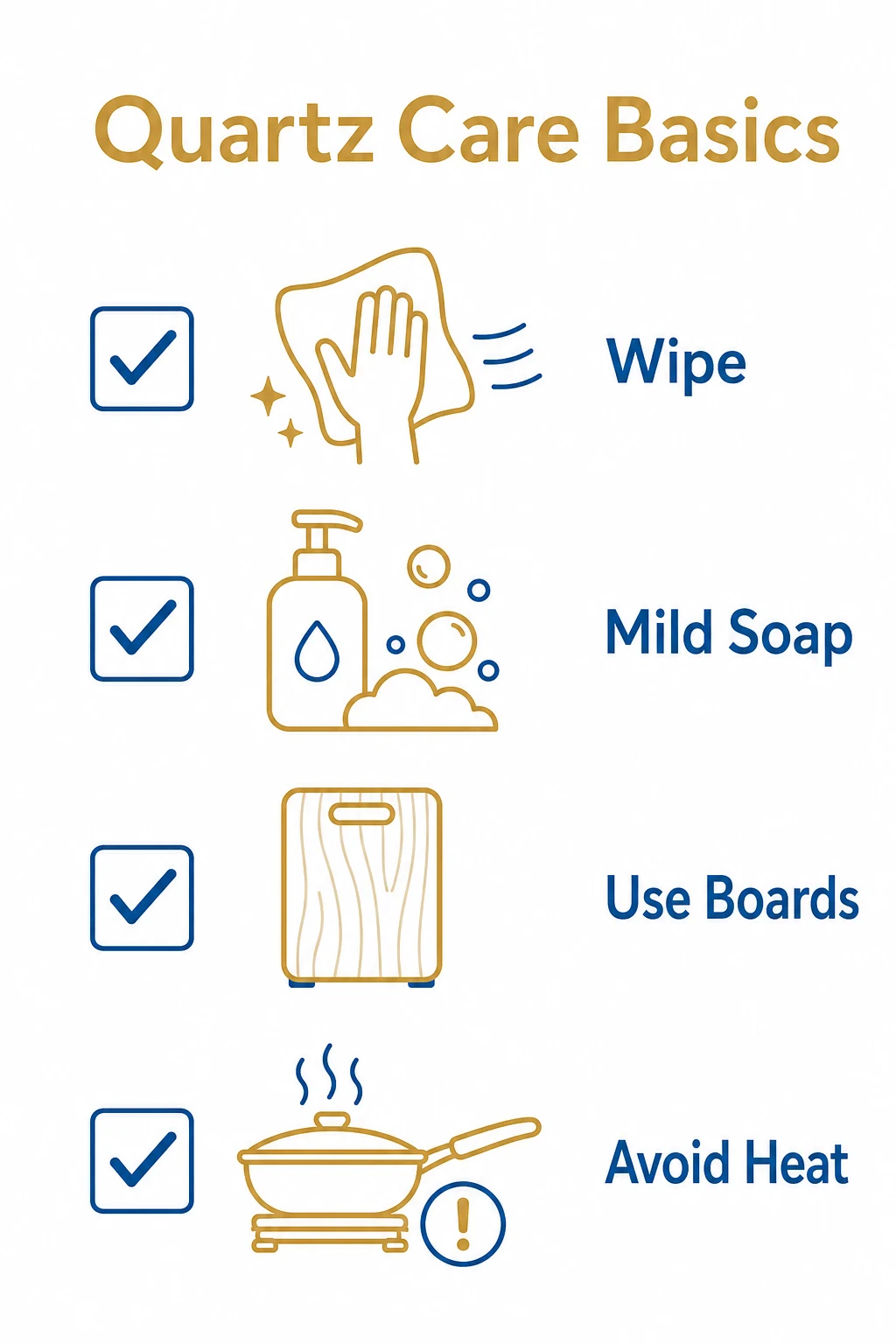
Compac quartz is straightforward to look after. For everyday cleaning, use a soft cloth with warm water and a mild cleaner. Wipe spills promptly, especially strongly coloured foods, oils, wine, coffee and acidic liquids. The surface is designed to resist staining, but quick cleaning is still the best habit.
Avoid abrasive pads, harsh chemical cleaners and strong solvents unless the manufacturer guidance says they are suitable. They can dull the surface or affect the finish. For dried marks, soften the residue first rather than scraping aggressively.
Use chopping boards for knives and trivets for hot cookware. These simple precautions are not a sign that the material is delicate. They are normal surface care and help protect the finish from avoidable marks, thermal shock and edge damage.
If you are choosing between several quartz designs, ask how each finish behaves in real use. Polished, textured and darker surfaces can show marks differently, so it is worth considering cleaning habits as well as colour preference.
- Compac quartz is a type of engineered stone because it combines natural quartz with resin and pigments.
- It is not the same as a natural stone slab, although it contains a very high proportion of natural quartz.
- Its non porous surface means it does not need sealing in the same way as some natural stones.
- Compac quartz is valued for durability, design control and easy everyday care.
- The best choice depends on the look you want, how the surface will be used and the quality of templating and installation.
Frequently asked questions
Is Compac quartz natural or man made?
Compac quartz is an engineered material. It contains a high proportion of natural quartz, combined with resin and pigments to create a durable slab surface.
Does Compac quartz need sealing?
No. Compac quartz is designed to be non porous, so it does not need sealing in the same way that some natural stones may require.
Is engineered stone better than natural stone?
Not always. Engineered stone is often easier to maintain and more consistent in appearance. Natural stone offers unique variation and geological character. The better choice depends on your priorities.
Can Compac quartz look like marble?
Yes. Many engineered quartz designs are made with veining and movement inspired by marble, while offering the practical benefits of quartz.
Choose with confidence
If you are weighing up Compac quartz, natural stone or another surface, Stone Connection can help you compare the options clearly and choose a material that suits the way your space will be used.