
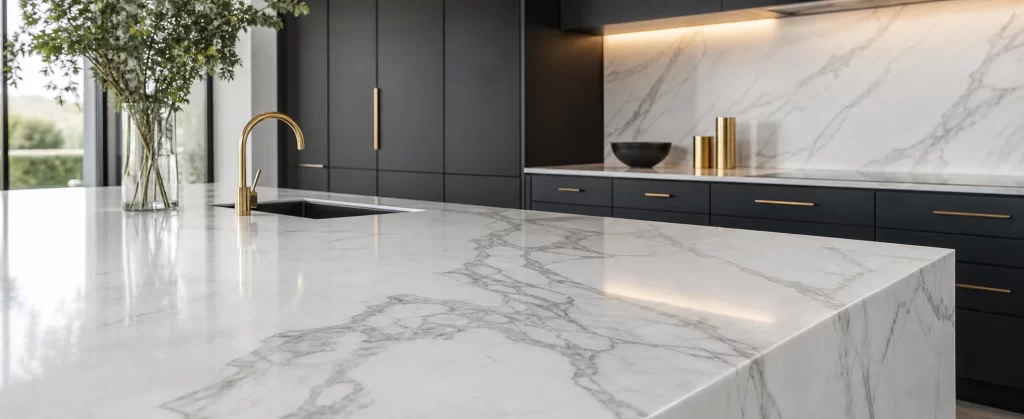
One of the first things people notice about marble is also one of the reasons they choose it. The veining is not printed, repeated or designed to match a sample exactly. It is part of the stone itself.
That natural variation can feel exciting, but it can also raise sensible questions when you are planning a kitchen, bathroom, table, bar counter or feature surface. This guide explains why marble worktop veining varies from slab to slab, how to view and choose slabs with confidence, and what to expect from a carefully fitted natural stone surface.
Marble is formed by nature, not manufactured to a pattern
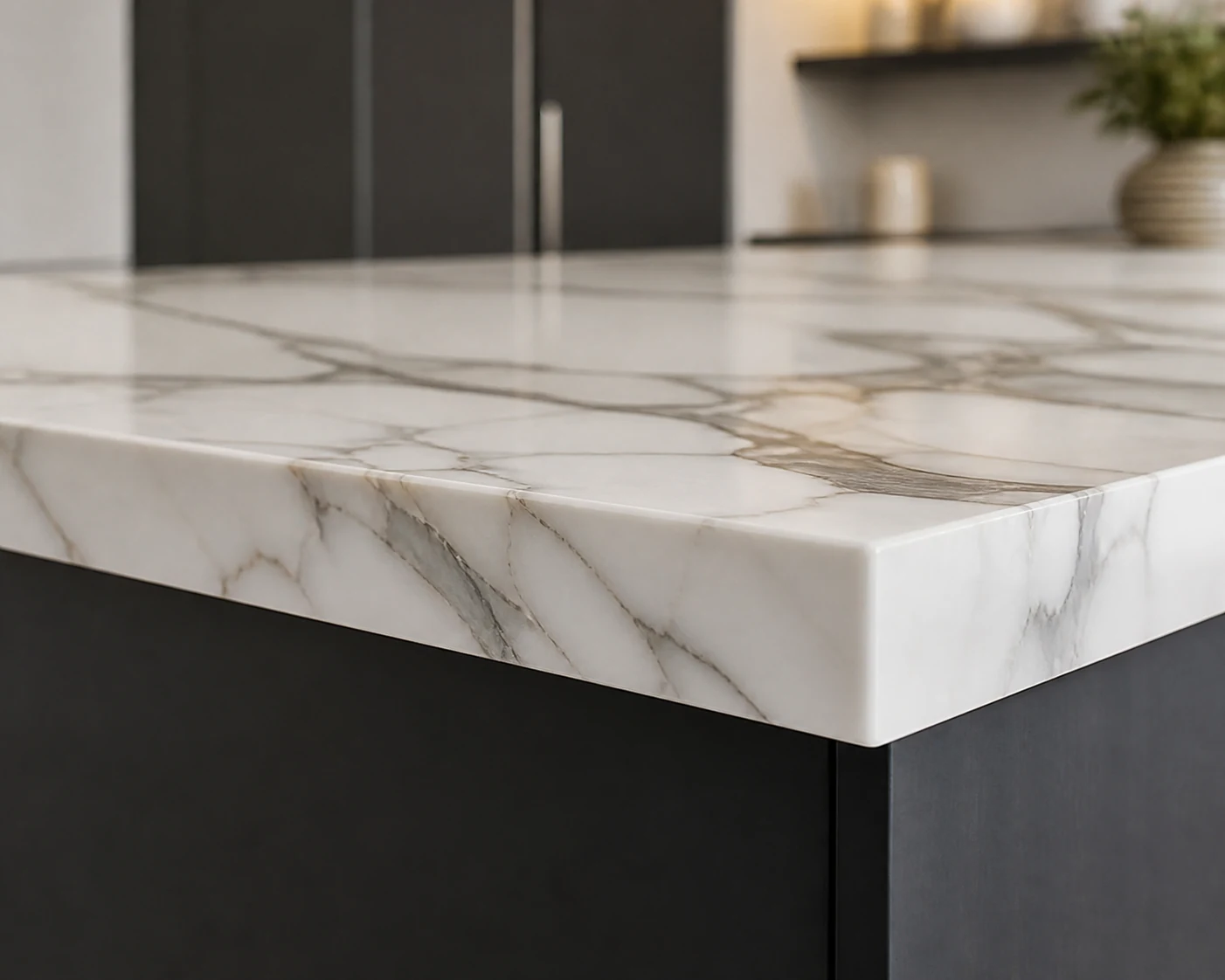
Marble begins as limestone that has been changed by heat, pressure and mineral movement over a very long period of time. During that process, different minerals pass through the stone and create the veins, clouds, lines and colour shifts that make each slab unique.
Because this happens naturally, no two blocks of marble are exactly the same. Even slabs cut from the same block can show different movement. One may have bold sweeping veins, while another from nearby in the block may look quieter, with softer markings and more open background colour.
This is very different from a manufactured surface, where pattern, colour and consistency can be controlled more closely. Marble does not aim for uniformity. Its value lies in the depth, movement and individuality created by the stone itself.
If you are exploring exotic stone marble for worktops and feature surfaces, this variation is part of what gives the material its premium character. The key is not to expect every slab to copy a small sample. The better approach is to understand the range of variation and choose the actual material with care.
Why a small sample cannot show the whole slab
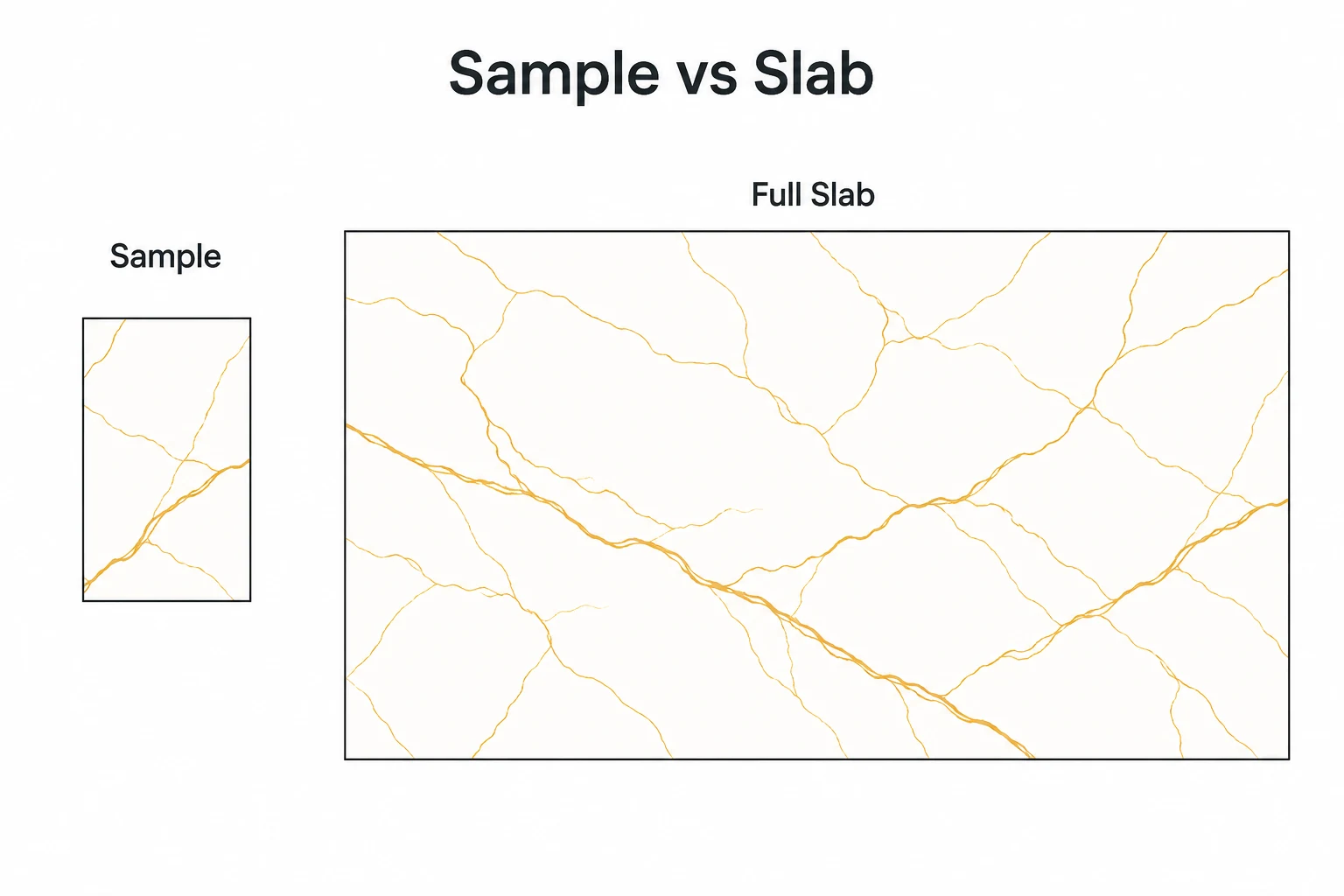
Samples are useful for judging broad colour, texture and finish, but they cannot show the full personality of a marble slab. A sample may come from a calm part of the stone, while the full slab may include stronger veining elsewhere. The opposite can also happen, with a sample showing dramatic movement from an area that is only a small part of the complete piece.
This is why buyers should treat samples as a starting point, not a final promise. They can help you decide whether you prefer a cooler white base, warmer cream tone, grey movement, darker contrast or richer natural detail. They are less reliable for judging the exact direction, spacing and density of the veining.
Full slab viewing gives a much more accurate sense of scale. It lets you see where the veins travel, how the background colour changes, whether the stone feels calm or dramatic, and how different sections could work across a worktop run, island, splashback, vanity, table or bar counter.
A good fabricator will help you look beyond one attractive detail and consider the whole surface. The best result is not simply choosing a beautiful slab. It is choosing a slab that suits the design, the room and the way the stone will be cut and fitted.
What causes veining to vary across marble slabs
Several natural factors influence the appearance of marble veining. Mineral content is one of the most important. Different minerals create different colours and levels of contrast, from soft grey lines to warmer tones, darker streaks or more dramatic movement.
The direction of cutting also matters. When a block is cut in one direction, the veins may appear as long flowing lines. When it is cut another way, the same stone can show a more clouded, layered or broken pattern. This is one reason two slabs from the same type of marble can feel surprisingly different.
The part of the block used can also change the look. Some sections may be relatively even, while others contain stronger veining, larger mineral deposits or more expressive variation. Natural stone is not a flat printed surface. It has depth and internal structure, so every cut reveals something slightly different.
Finish can influence perception too. A polished finish can make colour and veining feel more vivid, while a softer finish may give the surface a gentler character. The stone itself has not changed, but the way light responds to the surface can alter how the markings are read.
This is why marble selection benefits from practical guidance. The aim is not to remove variation, because that would remove much of the beauty. The aim is to understand it, plan around it and use it well.
How slab selection helps set the right expectations
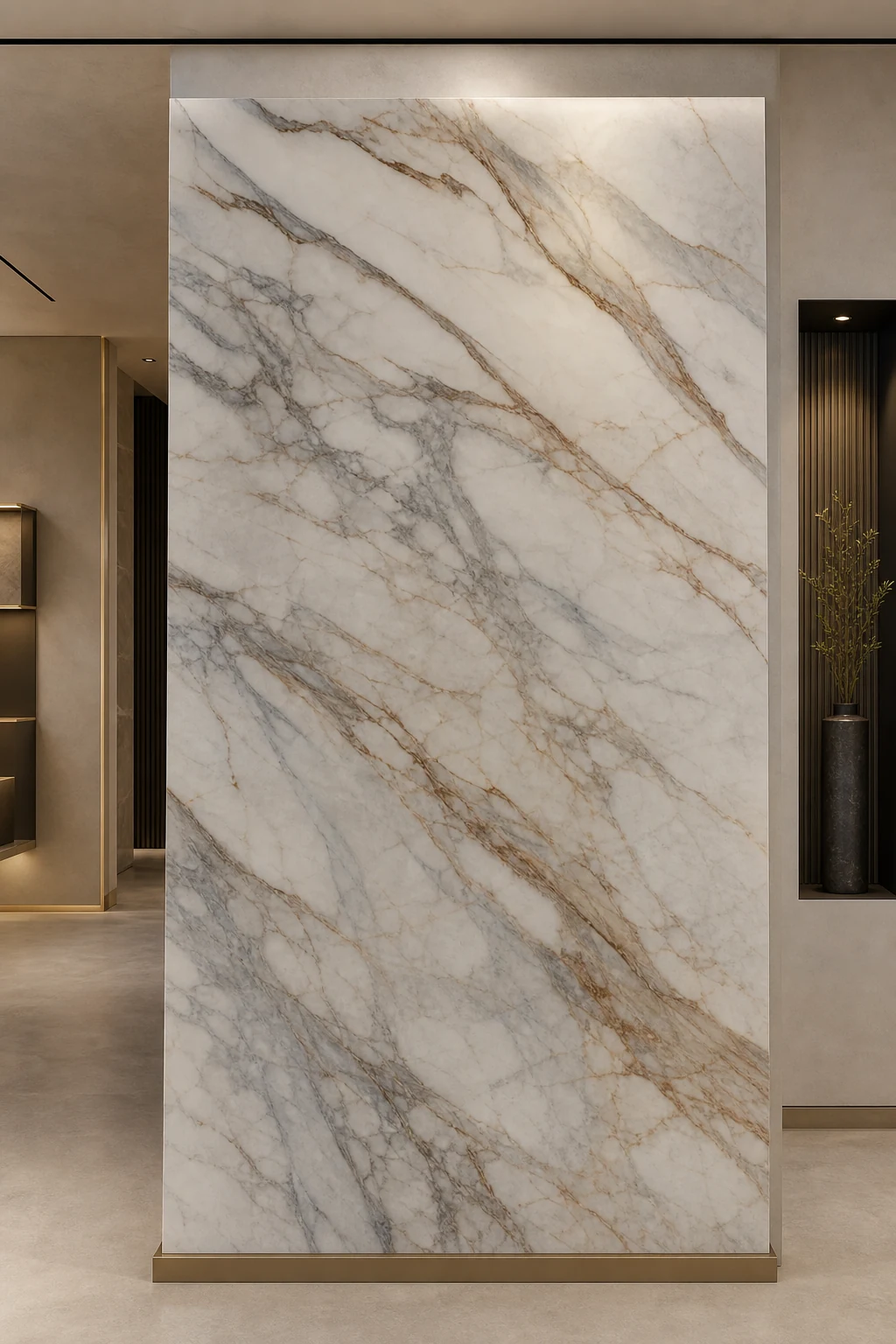
Slab selection is the stage where natural variation becomes a design decision. Instead of relying only on a name or sample, you can assess the actual stone that may be used for your project.
It helps to look at the full slab first, then focus on how it could be used. For example, a dramatic vein may be ideal across an island, a table top or a bar counter where the surface can be appreciated as one large piece. A quieter section may suit a worktop run where appliances, sinks or joins will break up the stone.
Templating and layout planning are also important. Once measurements and cut outs are known, the fabricator can consider where prominent veins may fall. This can help avoid placing an important detail in an awkward position, and it can also allow the strongest natural features to sit where they make most sense.
Where more than one slab is needed, the relationship between slabs becomes part of the conversation. Some projects benefit from a close visual match. Others look better when natural movement is allowed to flow more freely. The right answer depends on the design, the available material and the expectations agreed before fabrication begins.
For anyone considering marble in kitchens or bathrooms, the dedicated guide to marble kitchen and bathroom worktops can also help explain how the material is used in practical interior settings.
How marble compares with more consistent surfaces
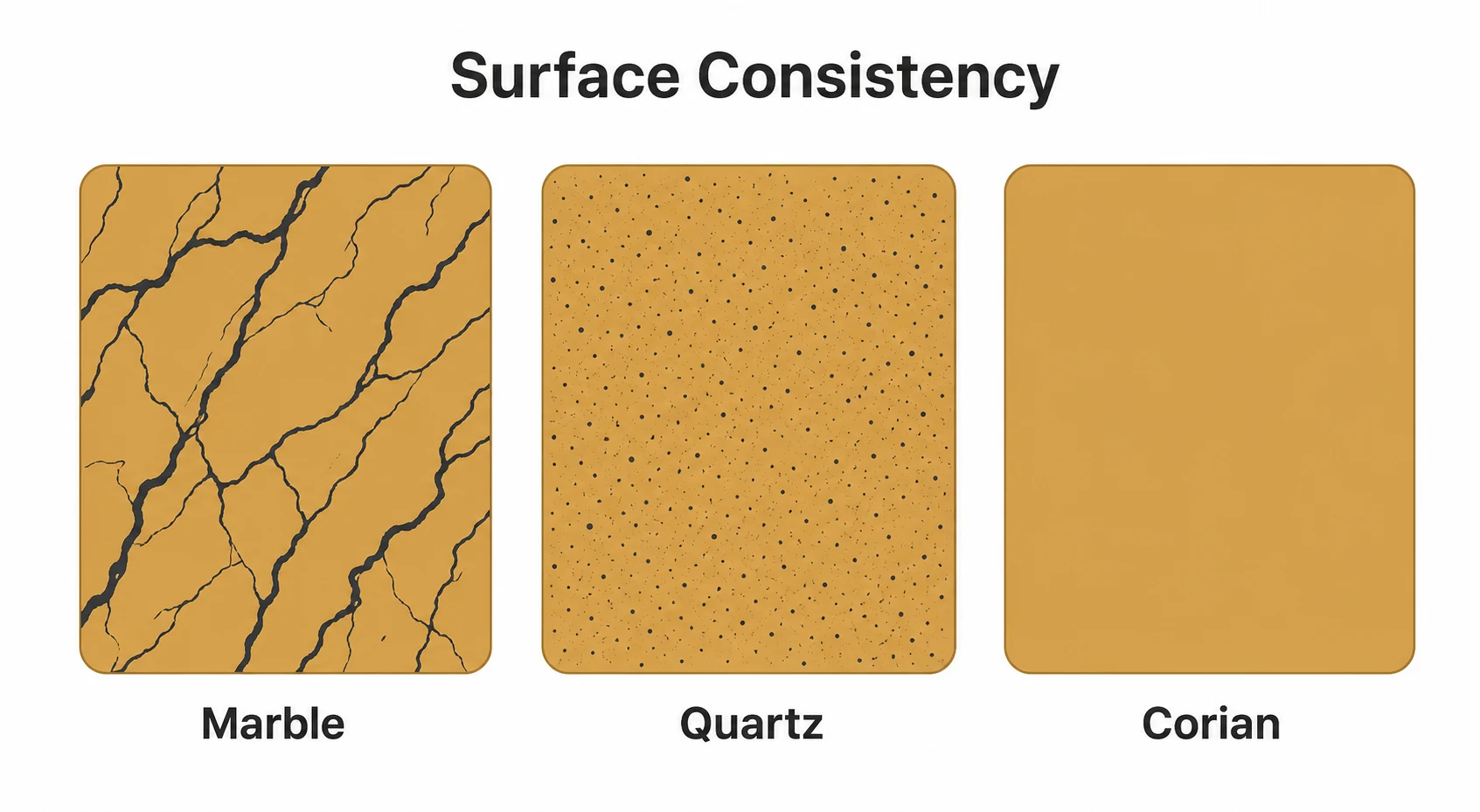
Marble is often chosen by people who want a surface with natural presence. It can feel elegant, expressive and individual because the markings belong to the stone rather than a repeated design.
That said, not every buyer wants the same level of variation. Some prefer a more controlled look, especially where they want multiple surfaces to match closely. In those cases, engineered quartz can be worth comparing because it is designed to offer more consistency across colour and pattern. Stone Connection also supplies quartz kitchen worktops for projects where a more uniform appearance is preferred.
This does not make one material better than the other. It simply means they answer different design priorities. Marble is ideal when natural movement, veining and one of a kind character are part of the appeal. Quartz is useful when predictable patterning and colour control are more important.
Large format sintered materials can also provide a different type of consistency and durability. They are sometimes chosen for contemporary schemes where a specific visual effect is wanted across larger surfaces. For buyers still comparing options, materials such as Dekton kitchen worktops can sit in a separate category from natural marble.
The best choice usually becomes clearer when you decide what matters most, natural variation, controlled consistency, visual drama, subtle pattern, surface performance or a combination of these qualities.
What to ask before choosing a marble worktop
Good questions make the selection process much easier. Before committing to a marble slab, ask whether the full slab can be viewed, how much natural variation is typical for that material, and whether the stone available now is similar to the sample you have seen.
It is also worth asking how the slab will be templated and how prominent veins may fall across the finished surface. If you are planning an island, table, long run, upstand or splashback, ask how the stone could be laid out to make best use of the veining.
For projects using more than one slab, ask whether the slabs come from the same block and how closely they relate visually. Matching is not always necessary, but it is better to understand the relationship before fabrication than to be surprised after installation.
You should also discuss edges, joins, cut outs and finish. These details influence how the marble reads in the finished space. A carefully chosen edge profile can frame the surface well, while thoughtful join planning can help the finished worktop feel considered and precise.
Most importantly, be open about what you like and what you do not like. Some people love bold veining. Others prefer a calmer surface with only gentle movement. A specialist can guide you more effectively when your visual expectations are clear.
- Marble veining varies because each slab is shaped by natural mineral movement, pressure and cutting direction.
- Small samples are helpful for colour and finish, but they cannot show the full pattern of a complete slab.
- Viewing and planning around the actual slab helps set clear expectations before fabrication.
- Marble is best suited to buyers who value natural character rather than repeated uniformity.
- A careful template and layout process helps the finished surface make the most of the stone.
Frequently asked questions
Is it normal for my marble worktop to look different from the sample?
Yes. A sample only represents a small part of a much larger slab. The finished worktop may include stronger or softer veining, depending on where the stone is cut from the slab.
Can I choose where the veins appear on my worktop?
You can often discuss preferred layout during templating and slab planning. Exact placement depends on the slab size, worktop dimensions, cut outs and joins, but careful planning can help use the stone well.
Are bold veins a flaw in marble?
No. Bold veining is a natural feature and is often one of the main reasons people choose marble. The important point is to select a slab with movement you genuinely like.
Should I choose marble if I want every surface to match exactly?
If exact consistency is your main priority, a manufactured or engineered surface may suit you better. Marble is chosen for natural variation, depth and individuality.
Choose marble with confidence
If you are considering marble for a worktop, table, vanity or bar counter, Stone Connection can help you understand the material, compare options and plan a surface that celebrates the stone properly.