
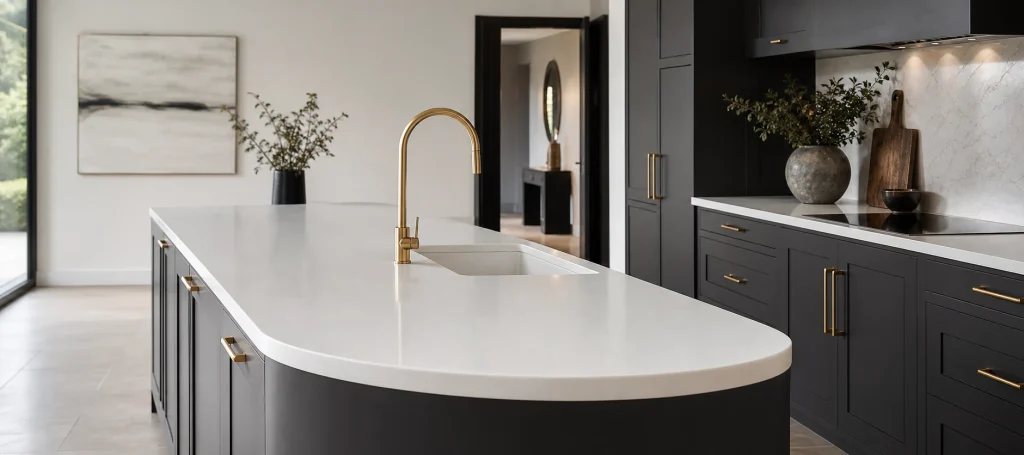
Curves, flowing worktop lines and uninterrupted sink areas can make a kitchen or commercial surface feel calm, practical and carefully resolved. They also ask more of the material than a simple straight run.
Corian is often considered when buyers want a shaped surface with a smooth finish, integrated details and joins that are far less obvious than many traditional worktop choices. For anyone comparing solid surface materials with stone or quartz, it is worth understanding where Corian fits best.
What makes Corian different from stone and quartz
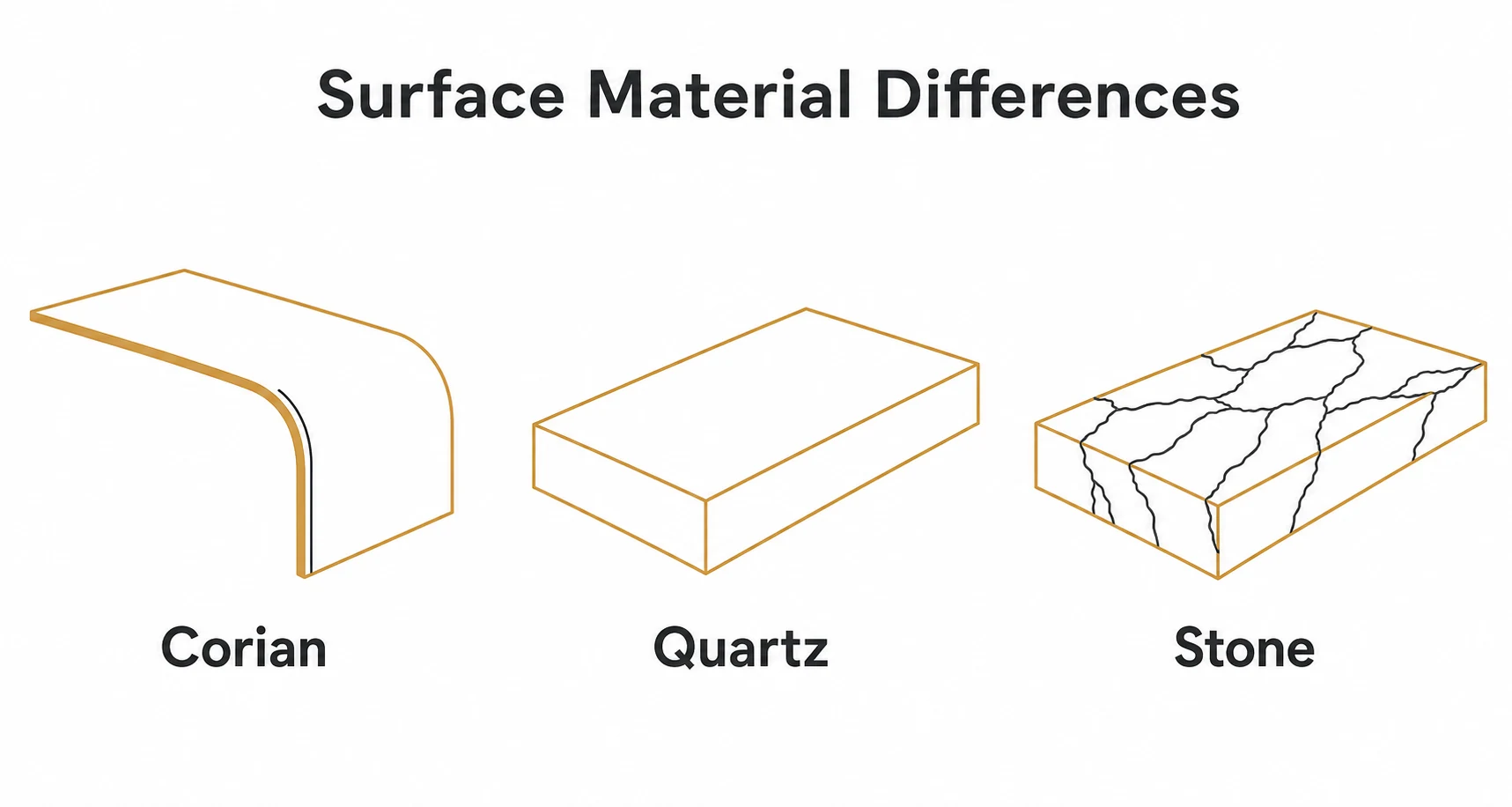
Corian is a solid surface material, which means the colour and pattern run through the thickness of the sheet rather than being limited to a thin decorative top layer. It is formed into sheets and shaped by trained fabricators, giving designers and homeowners more freedom with curves, sinks, upstands and detailed edges.
Natural stone and quartz remain excellent choices for many worktops. Granite, marble and quartz bring their own depth, veining and character, and they are often chosen where a crisp slab look is the priority. Corian is different because it can be worked in a way that supports softer lines and visually continuous surfaces.
That distinction matters when the design includes a rounded breakfast bar, a sweeping island end, a curved reception counter or a sink area where the buyer wants fewer visual breaks. In those situations, the way the material is fabricated can be just as important as the colour selected.
Stone Connection offers Corian worktops for shaped and seamless surface designs, which makes it a useful option to compare early in a project rather than treating it as an afterthought.
Why Corian works well for curved worktops
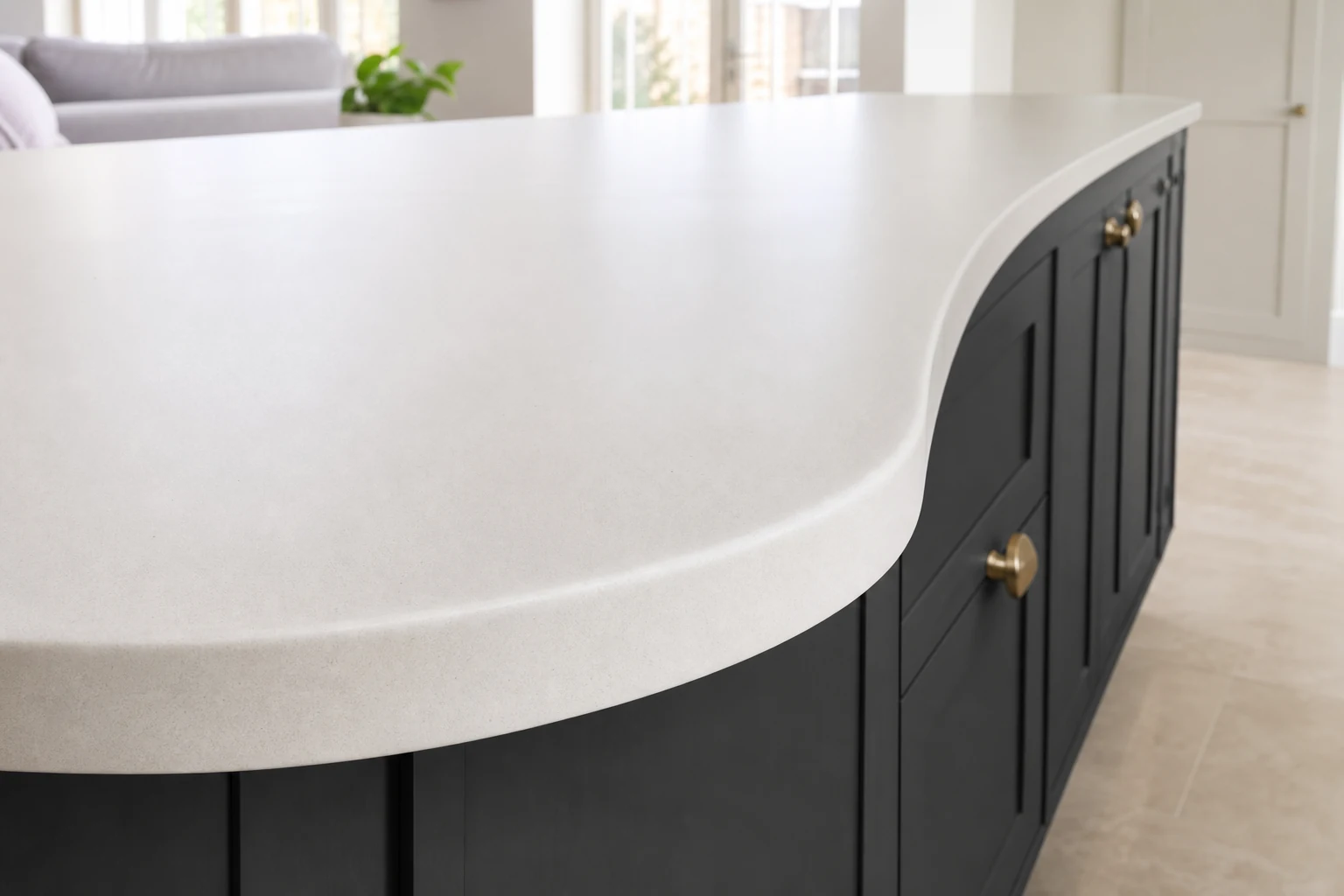
Curved worktops need a material that can be cut, shaped and finished cleanly. Corian is well suited to this because it can be routed and formed into smooth profiles without relying only on straight slab geometry. This opens up design possibilities that can feel more natural in rooms where movement, access and comfort matter.
A curve can soften the end of an island, make seating areas easier to use, or help a worktop follow an unusual wall or layout. In commercial settings, curves can also help counters feel more welcoming while improving flow around service points.
The benefit is not only aesthetic. Sharp corners can feel awkward in tighter layouts, especially where several people use the same space. A rounded end or shaped return can make the surface easier to live with, while still keeping the finish polished and precise.
Corian also allows edge details to be considered as part of the whole design. A simple square edge, a softened radius or a thicker looking built up edge can all affect how substantial the worktop feels. With a curved surface, those edge choices become highly visible, so accurate fabrication is essential.
How seamless sink runs improve daily use
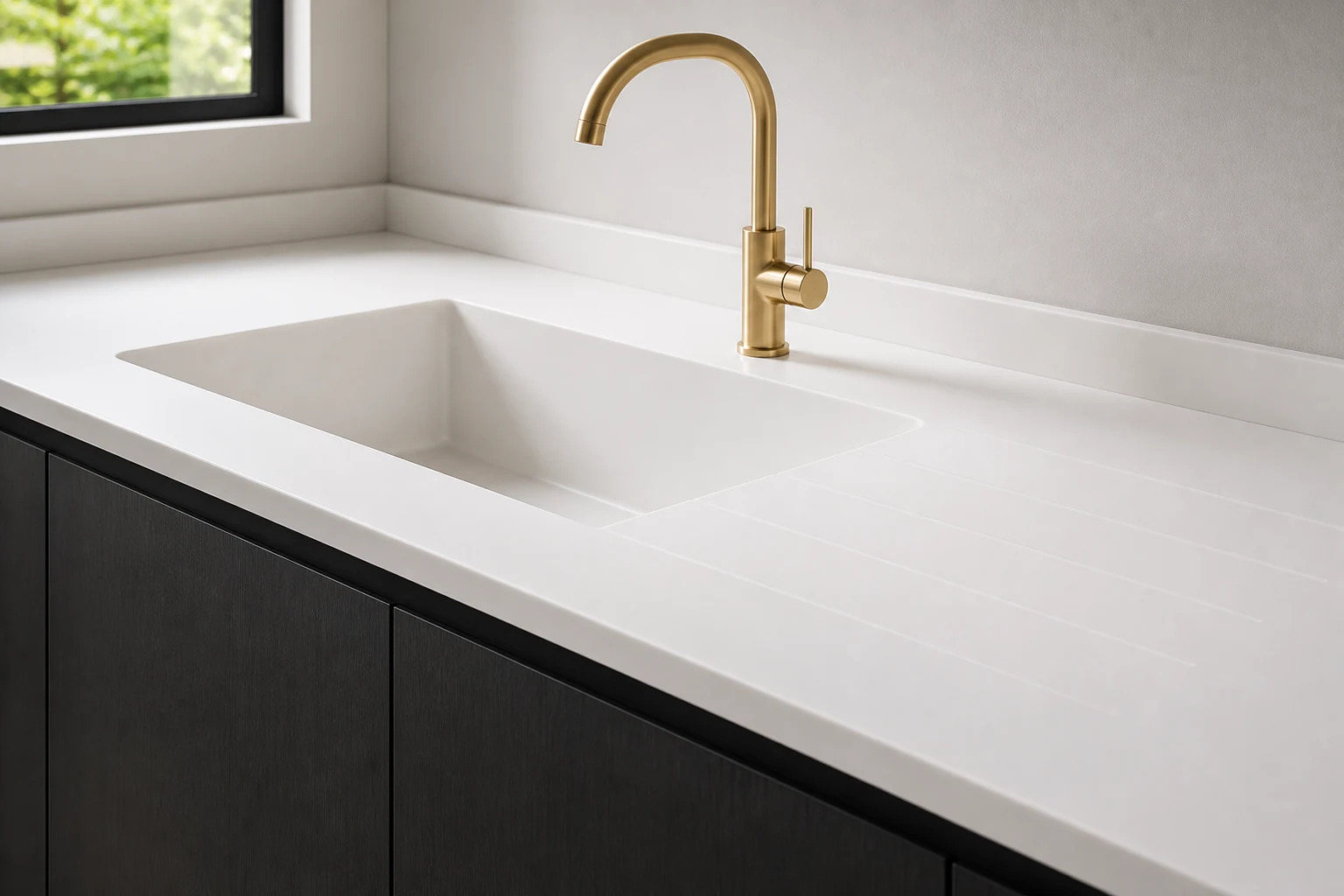
One of the strongest reasons to choose Corian is the way it can be used around sinks. Integrated sinks and joined sink areas can create a continuous surface where the worktop and sink feel like part of the same piece.
This can be especially helpful in busy kitchens, utility spaces, healthcare style environments, hospitality counters and workplace tea points. Fewer visible joins around the sink can make the area feel cleaner and simpler, and it reduces the number of obvious edges where water and residue tend to collect.
A seamless sink run does not mean the surface needs to look plain. Corian is available in a wide choice of colours and finishes, from subtle neutrals to more expressive patterns. The right choice depends on the setting, the cabinetry, the lighting and the level of visual contrast wanted.
For many buyers, the practical appeal is the main point. A sink area is used every day, often heavily. When the bowl, drainer zone and surrounding worktop have been planned together, the result can feel more considered than combining separate parts late in the design.
Discreet joins and longer runs
All worktop materials have practical limits around sheet or slab size, access and installation. The difference with Corian is that its joins can often be bonded and finished so they are much less noticeable than the joins in many stone or quartz installations.
This is useful on long worktop runs, large islands, shaped counters and layouts where a join would otherwise interrupt the design. It can also help when the project includes upstands, coved details or a run that turns a corner.
Discreet joins rely on skilled measuring, templating, fabrication and fitting. The material makes the result possible, but the quality of the finished surface depends on the workmanship. Good planning also helps decide where joins should sit, how the surface will be supported and how the worktop will meet walls, appliances and sinks.
For buyers comparing options, this is where Corian should be judged on the finished detail rather than on a small sample alone. A sample shows colour and texture, but it cannot fully show how a curved run, sink area or joined counter will feel once installed.
Where Corian is a strong choice and where quartz or stone may suit better
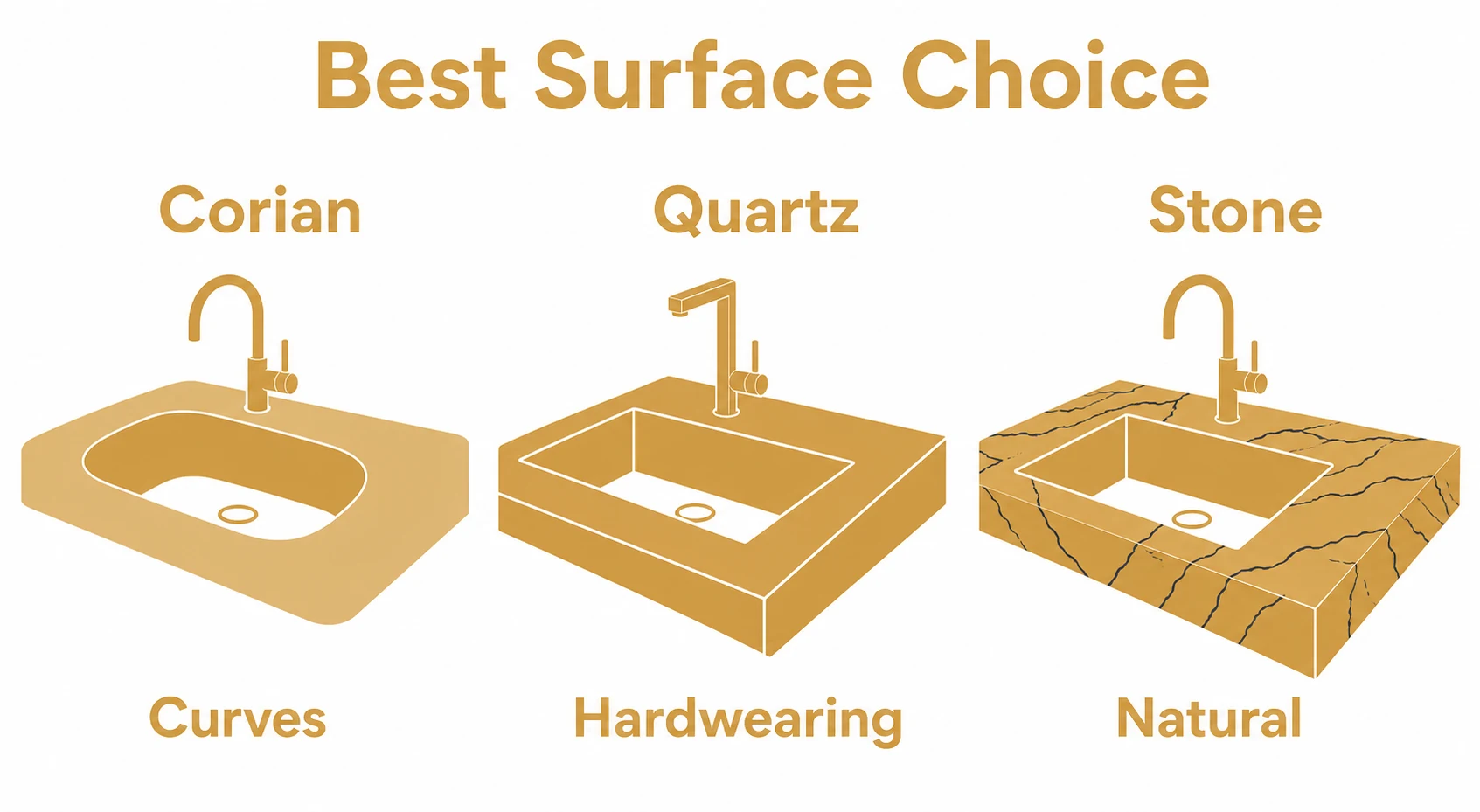
Corian is a strong choice when the brief includes curves, integrated sinks, subtle joins and a smooth contemporary finish. It is also useful where the design needs shaped details, clean transitions and a calm surface that does not dominate the room.
Quartz may be preferred where the buyer wants a very hard engineered stone surface with the appearance of a slab material. Natural stone may be preferred where unique veining, mineral variation and natural character are central to the design. Each material has its place, and the best decision depends on how the surface will be used.
It helps to compare materials against the actual design rather than asking which one is best in general. A straight kitchen with a dramatic stone feature may point one way. A curved island with an integrated sink and discreet joints may point another.
Useful questions include:
- Does the layout include curves or shaped ends?
- Is an integrated sink important to the look or daily use?
- Will visible joins affect the overall design?
- Is the priority natural variation, slab character or a more continuous surface?
- How will the worktop be cleaned and used each day?
Answering those questions early makes the specification clearer and avoids choosing a material on appearance alone.
Planning a Corian worktop properly
A good Corian result starts with a clear brief. The fabricator needs to understand the layout, sink requirements, appliance positions, edge profiles, overhangs, support needs and any curves or shaped details.
Templates are important because curved worktops and seamless sink runs leave little room for guesswork. Accurate measurements help the finished surface meet cabinetry, walls and appliances neatly. They also help decide how the surface should be transported and fitted.
Colour choice should be made in the context of the whole room or commercial setting. Pale shades can make a surface feel bright and continuous, while deeper tones can add contrast. Patterned options can bring more movement, although they should still be considered alongside the desired join quality and overall layout.
It is also worth thinking about how the worktop will be maintained. Corian is designed as a practical surface, but like any premium material, it benefits from sensible care. Cutting boards, trivets and routine cleaning all help preserve the finish and keep the surface looking its best.
The most successful projects treat Corian as part of the design from the start. When curves, sinks, edges and joins are planned together, the surface can look intentional rather than adapted around constraints.
- Corian is well suited to curved worktops because it can be shaped and finished with smooth, precise edges.
- Integrated sink runs are one of Corian’s main strengths, especially where a continuous and easy to use surface is important.
- Discreet joins can make long runs, islands and shaped counters look calmer and more resolved.
- Quartz and natural stone may still be better choices where slab character, natural veining or a particular stone finish is the priority.
- The best material choice depends on the layout, daily use, sink design and the level of visual continuity wanted.
Frequently asked questions
Is Corian a good choice for a curved kitchen island?
Yes. Corian is a strong option for curved island designs because it can be shaped and finished cleanly. It works especially well where the design includes rounded ends, flowing seating areas or a softer worktop outline.
Can a Corian sink look seamless with the worktop?
Corian can be used with integrated sink designs where the sink and surrounding surface feel visually continuous. This is one of the reasons it is often chosen for clean, practical sink runs.
Will joins in Corian be invisible?
Joins in Corian can often be made very discreet, but the final result depends on the colour, pattern, layout and quality of fabrication. A skilled supplier will plan join positions carefully before fitting.
Is Corian better than quartz for every worktop?
No. Corian and quartz suit different priorities. Corian is particularly useful for curves, integrated sinks and subtle joins. Quartz is often chosen for a harder engineered stone feel and a slab style finish.
Talk through your Corian design
If you are planning a curved worktop, seamless sink run or shaped counter, Stone Connection can help you compare the options and understand whether Corian is the right fit for the design.