
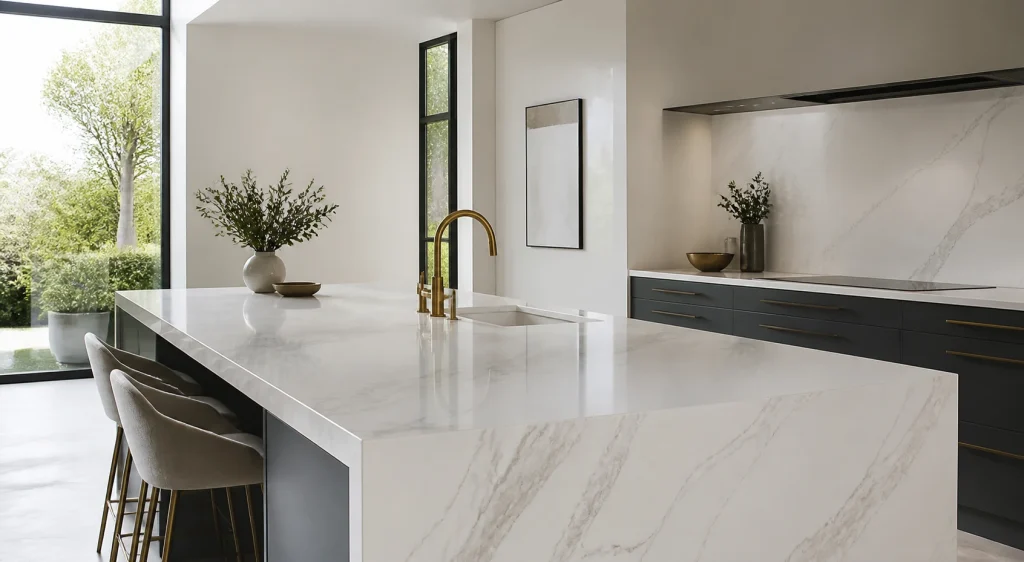
Choosing a kitchen surface often comes down to a simple tension: you want the beauty of stone, but you also want a worktop that feels practical for daily life.
IQ quartz is designed to sit neatly in that space. It offers the polished finish, depth and movement many people associate with natural stone, while bringing the consistency and resilience expected from engineered stone.
What makes IQ quartz different from natural stone
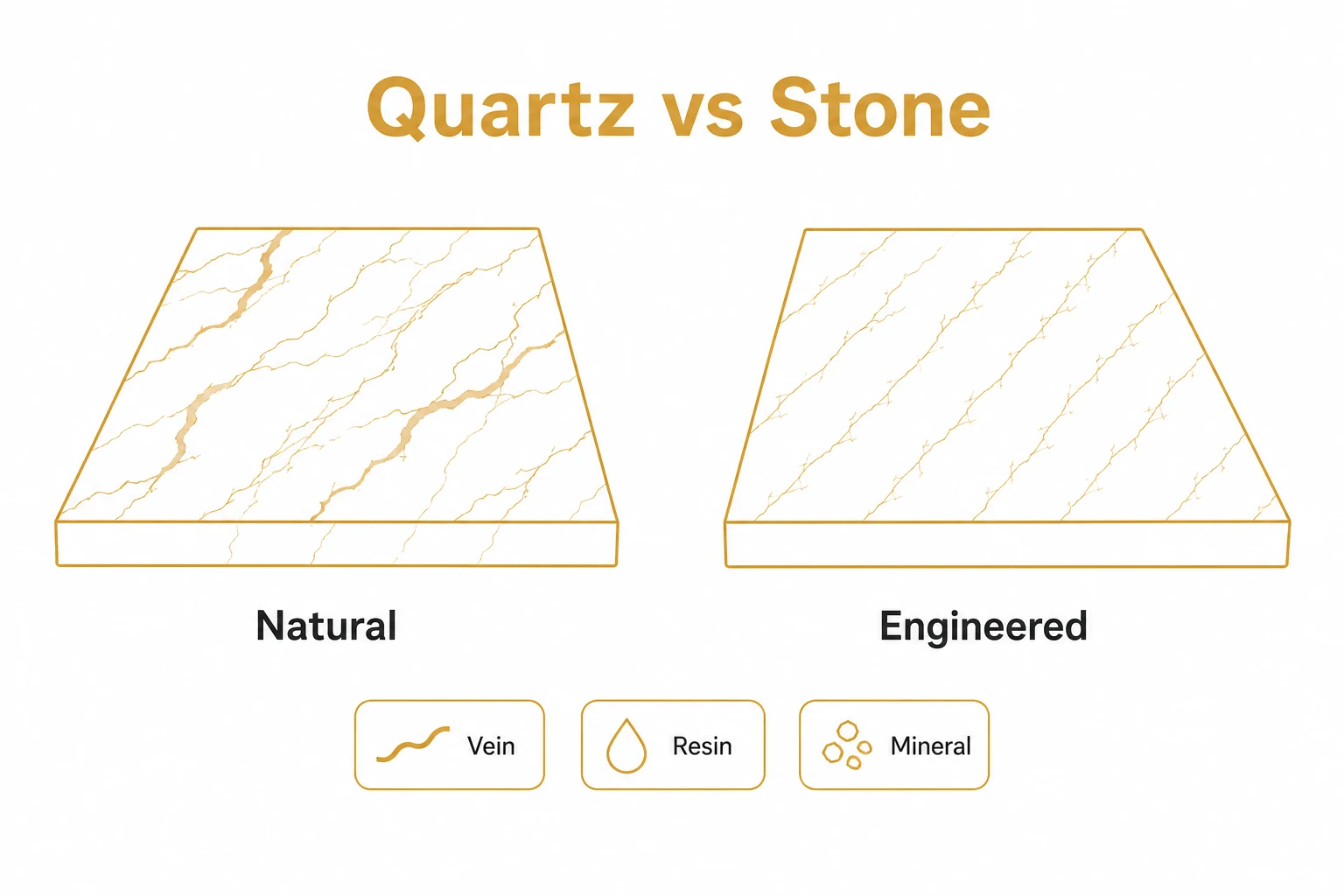
Natural stone has its appeal because every slab is unique. Marble, granite and other stones can carry veining, mineral movement and subtle variation that make a kitchen feel individual. For many buyers, that is the look they are trying to capture.
IQ quartz takes a different route. It is an engineered stone surface, which means it is made to give a controlled, reliable finish while still offering designs inspired by natural stone. That balance is the main reason it is often considered for premium kitchens where appearance matters, but so does everyday performance.
The key distinction is predictability. With natural stone, the exact colour, veining and pattern can vary significantly between slabs. With IQ quartz, the design is more consistent, which can make it easier to plan around cabinets, flooring, splashbacks and appliances. That does not mean the surface has to look plain. Many quartz designs use veining, soft movement and polished finishes to create a refined stone look.
For buyers comparing materials, the choice is not simply natural versus artificial. It is about deciding which qualities matter most. If you want the rare variation of a natural slab, natural stone may appeal. If you want stone kitchen worktops with a premium look and more controlled performance, IQ quartz worktops are worth serious consideration.
Why durability matters in a premium kitchen
A premium kitchen is not only judged by how it looks on the day it is fitted. It needs to keep feeling considered, clean and practical through regular use. Worktops carry much of that pressure because they are used for preparation, serving, cleaning, storage and often socialising.
Engineered stone is popular because it is made with everyday kitchen demands in mind. IQ quartz gives buyers a surface that can cope with normal household routines while still delivering a polished, elegant finish. For most people, that means less anxiety around daily use and more confidence that the worktop will suit a busy kitchen.
Durability should be understood in a practical way. A good worktop needs to resist common wear, clean easily and provide a stable surface for regular tasks. It should also feel substantial, because the tactile quality of stone countertops is part of their appeal. IQ quartz can offer that solid, refined feel without asking the homeowner to accept the same level of variation or porosity that may come with some natural stones.
Good care still matters. Chopping boards, trivets and sensible cleaning habits help any surface look its best. The advantage of quartz is that it supports those habits with a surface that is designed for consistency. That is especially useful when the kitchen is intended to be both a working room and a visible design feature.
Natural stone style without unpredictable variation
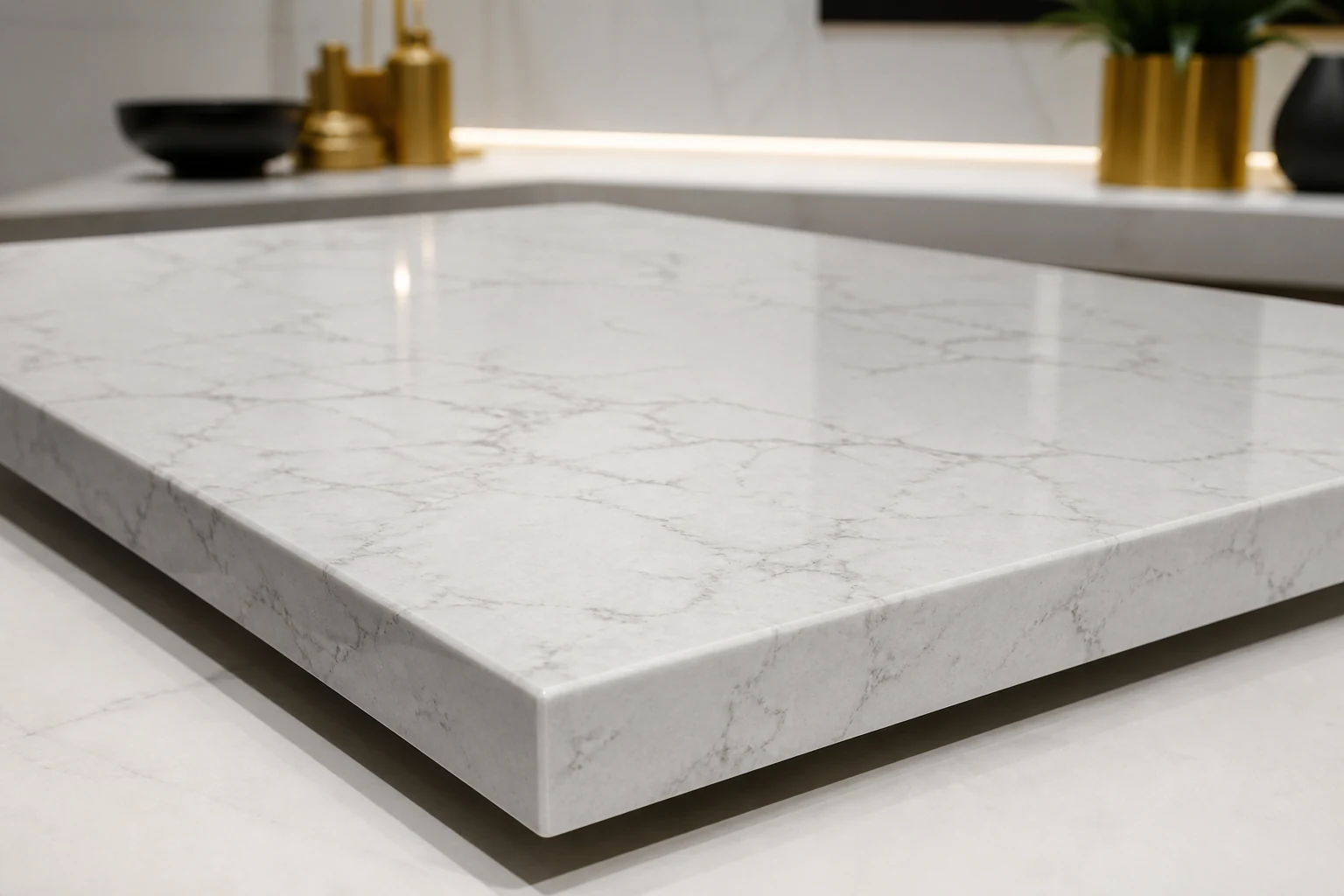
One of the most common reasons people look at IQ quartz is the design flexibility. Natural stone style is not only about bold veins. It can also mean soft clouding, fine movement, warm undertones, cool neutrals, mirror like polish or a calmer surface that lets the rest of the kitchen lead.
Because IQ quartz is engineered, homeowners can choose a finish that suits the full design rather than hoping a natural slab matches the brief. That can be useful in kitchens where the worktop needs to link several elements together. Cabinets, flooring, wall colour, handles, lighting and splashbacks all influence how the stone reads in the room.
Some designs create a marble inspired look, while others feel cleaner and more understated. A polished quartz surface can bring light into the kitchen and help the room feel crisp. A surface with stronger veining can become the focal point, especially on an island or a long run of cabinetry. The important thing is to choose the level of movement deliberately.
If you are still deciding how quartz might work in a compact layout, Stone Connection has more guidance on quartz worktops in small kitchens, including how surface choice can affect the sense of space and style.
How to judge whether IQ quartz suits your design
Start with the role you want the worktop to play. Some kitchens need the surface to be quiet and architectural. Others need the worktop to provide the main visual interest. IQ quartz can support both approaches, but the best choice depends on the rest of the scheme.
For a calm kitchen, look for subtle designs with gentle movement. These can work well with detailed cabinetry, strong flooring or statement lighting because they add polish without competing. For a more dramatic kitchen, consider bolder veining or a stronger contrast between the base colour and pattern. This can give an island or bar area a more luxurious feel.
It is also worth thinking about edge profile and thickness. A simple edge can feel modern and precise, while a more detailed profile may suit a classic kitchen. The same material can feel quite different depending on how it is cut, finished and fitted. This is where templating and installation quality become part of the design, not just the practical process.
Samples help, but they should be viewed as part of the wider kitchen plan. A small piece of quartz can show colour and finish, but larger surfaces reveal movement and balance more clearly. If you are comparing several stone countertops, try to judge them against the cabinet colour, flooring sample and planned lighting rather than in isolation.
Where IQ quartz works especially well
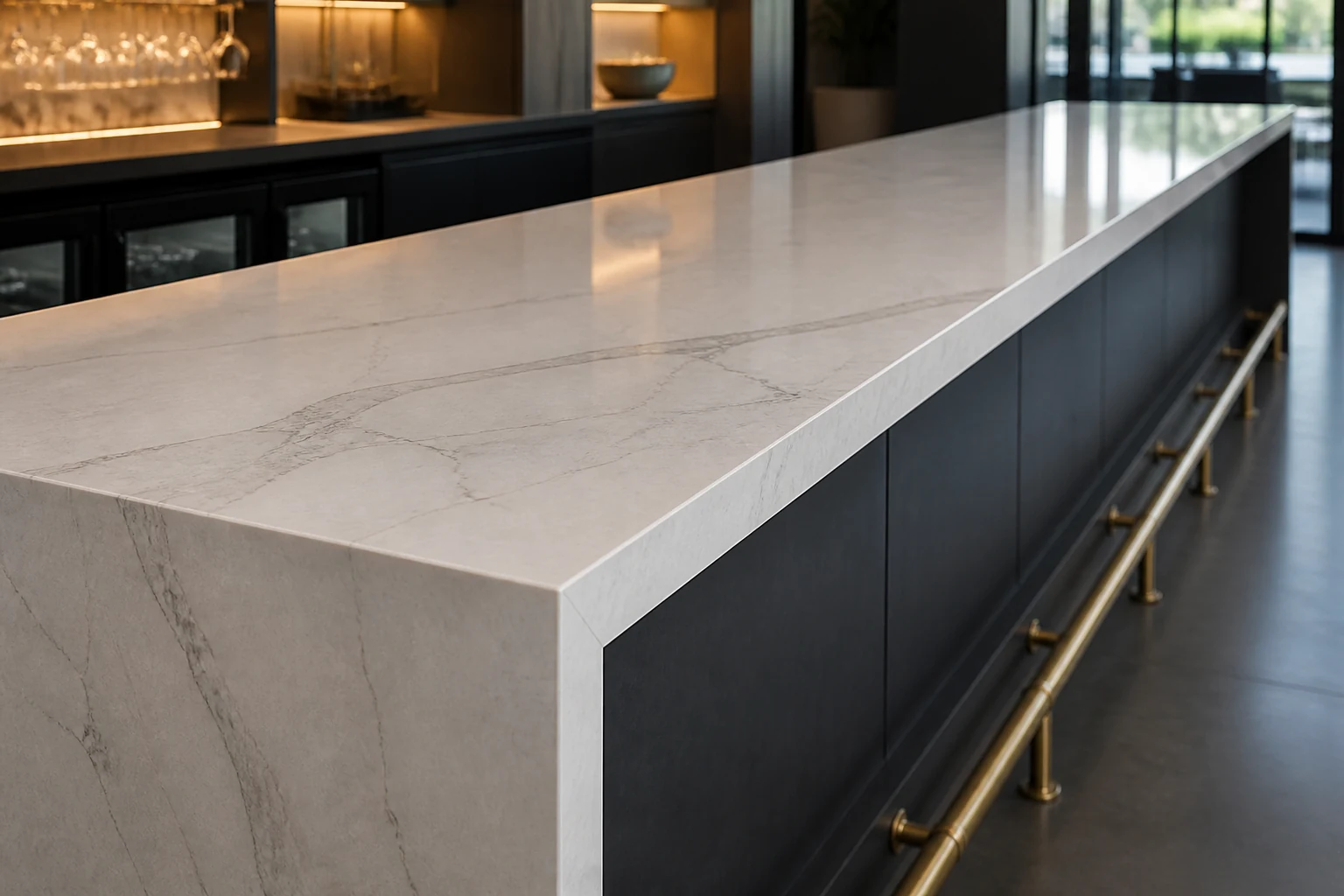
IQ quartz is a strong fit for kitchens where the owner wants a premium finish without making the room feel too delicate for normal use. It is often considered for islands, preparation runs, splashbacks, upstands and dining extensions because it can give a clean, cohesive look across different surfaces.
It can also work well in open plan spaces, where the kitchen surface is visible from living or dining areas. In that setting, the worktop needs to feel like furniture as much as a practical surface. A polished quartz design can help bridge that gap, bringing the visual quality of stone into a room that is used throughout the day.
For homeowners weighing quartz against other options, it may help to look at broader material guidance. Stone Connection explains the category in more detail on its quartz kitchen worktops page, which is useful if you are comparing quartz with marble, granite, Corian or other solid surfaces.
Outdoor kitchens, utility spaces and commercial style home bars may also influence material thinking, although every setting should be judged on its own conditions. If exterior use is part of the plan, it is sensible to get specific advice before choosing any surface. For related planning points, see the guide to designing outdoor kitchens with stone worktops.
The importance of fabrication and fitting
The material is only one part of the result. A premium quartz worktop depends on careful measurement, accurate templating, clean cutting and skilled fitting. Even a beautiful slab can lose impact if joins, edges, cut outs or overhangs are not handled with precision.
When planning IQ quartz, think about practical details early. Sink choice, hob position, tap holes, drainage grooves, upstands, splashbacks and island overhangs all affect how the finished surface performs. These decisions also influence the look of the stone, especially where veining needs to be positioned thoughtfully.
Good fabrication helps the worktop feel intentional. Joins should be planned with the layout in mind. Edges should suit the kitchen style. Cut outs should support the appliances and fittings without distracting from the surface. This is where a specialist can guide the balance between design ambition and practical use.
For a buyer, the best question is not only which quartz should I choose. It is also who will help me turn that material into a finished worktop that suits the room. IQ quartz gives the design foundation, but careful workmanship gives it the polished final result.
- IQ quartz offers the practical appeal of engineered stone with designs inspired by natural stone.
- Its consistency can make kitchen planning easier than relying on the natural variation of individual stone slabs.
- Veining, polish, edge profile and layout all affect how premium the finished worktop feels.
- Good templating, fabrication and fitting are essential to getting the best from any quartz surface.
- The right choice depends on how the worktop needs to perform as both a working surface and a design feature.
Frequently asked questions
Is IQ quartz the same as natural stone?
No. IQ quartz is an engineered stone surface. It is designed to offer a refined stone look with more consistency than many natural materials.
Does IQ quartz look like marble?
Some IQ quartz designs are inspired by marble style veining and polish, while others are more subtle or contemporary. The best option depends on the kitchen design and how much movement you want in the surface.
Is IQ quartz suitable for busy kitchens?
Yes, it is designed with everyday kitchen use in mind. Sensible care, such as using chopping boards, trivets and appropriate cleaning products, will help keep the surface looking its best.
How should I choose an IQ quartz colour?
View the surface alongside cabinet, flooring and splashback samples. Think about whether you want the worktop to be a quiet backdrop or the main feature in the kitchen.
Plan your IQ quartz worktop
If you are comparing engineered stone with natural stone, Stone Connection can help you judge the right finish, layout and detailing for your kitchen.