
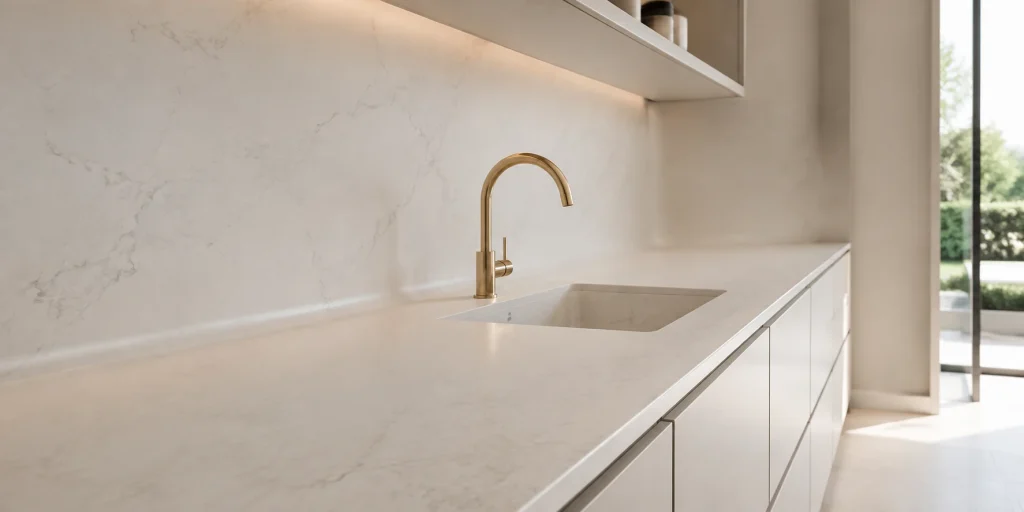
Integrated splashbacks are often chosen for the way they simplify a kitchen, but their real value is practical as well as visual. When the worktop and the wall protection are planned together, there are fewer awkward junctions, fewer exposed edges and a cleaner finish around the areas that see daily use.
Solid surface materials such as Corian are especially well suited to this kind of design. They can be shaped, joined and finished with a level of continuity that helps answer two common buyer concerns at once, how easy the space will be to keep clean and whether the finished kitchen will feel calm, considered and built to last.
What makes an integrated splashback different
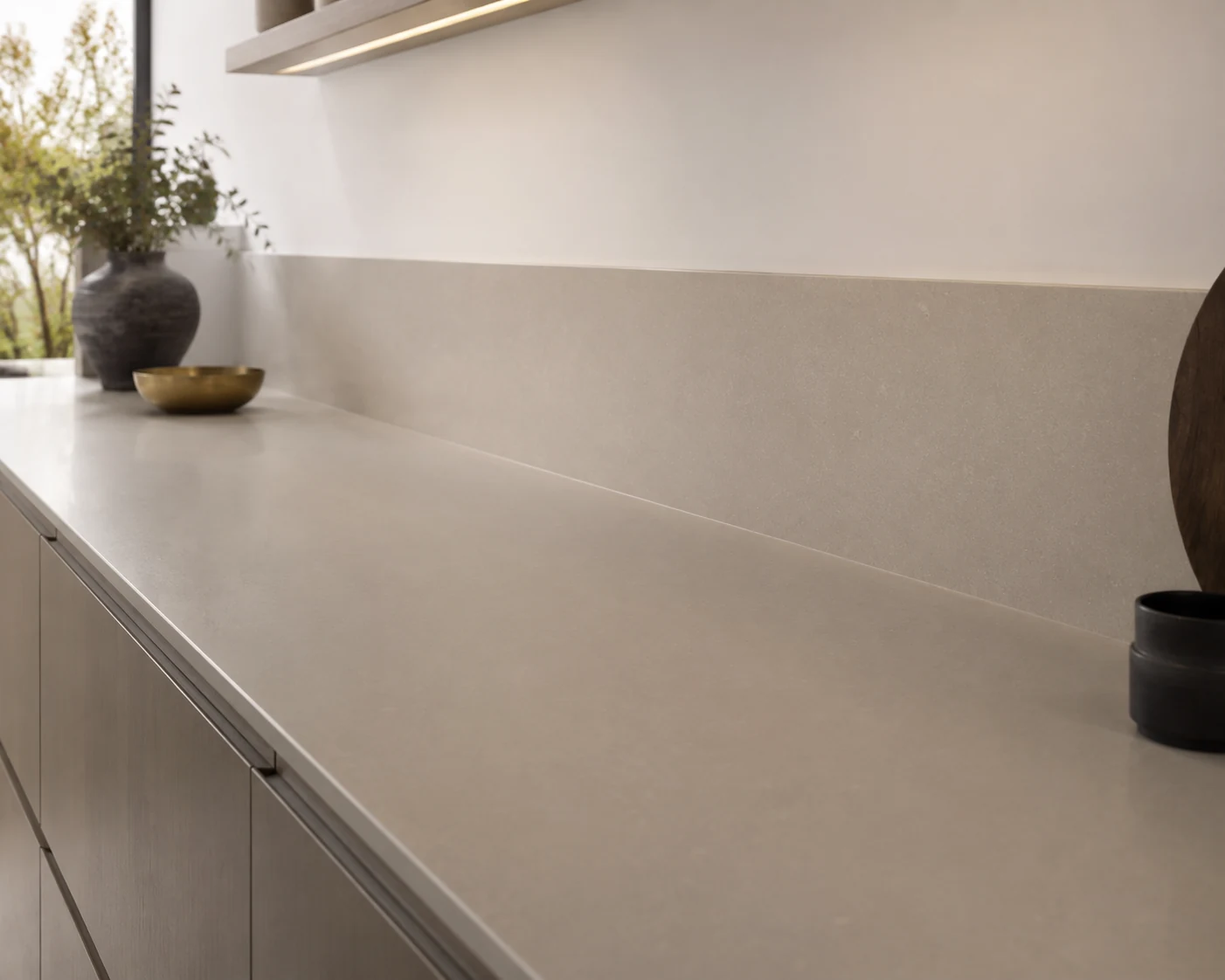
A standard splashback is usually treated as a separate surface. It might be tile, glass, stone, metal or another panel fixed behind the worktop. That can work well, but it also introduces a meeting point between the horizontal worktop and the vertical wall finish. In everyday use, that meeting point matters.
An integrated splashback is designed as part of the worktop scheme. The material rises from the back edge as an upstand, splashback or taller wall panel, creating a more continuous protective surface behind sinks, hobs, preparation areas and serving zones. The result is a cleaner transition from worktop to wall.
With solid surface worktops, the joins can be finished neatly and the edge detail can be controlled with precision. This is one reason many homeowners and commercial designers consider Corian when they want wall protection that feels purposeful rather than added at the end. If you are comparing material options, Stone Connection’s Corian worktops and surfaces offer a useful starting point for understanding how the material can be used across worktops, upstands and splashbacks.
Why seamless joints help with hygiene
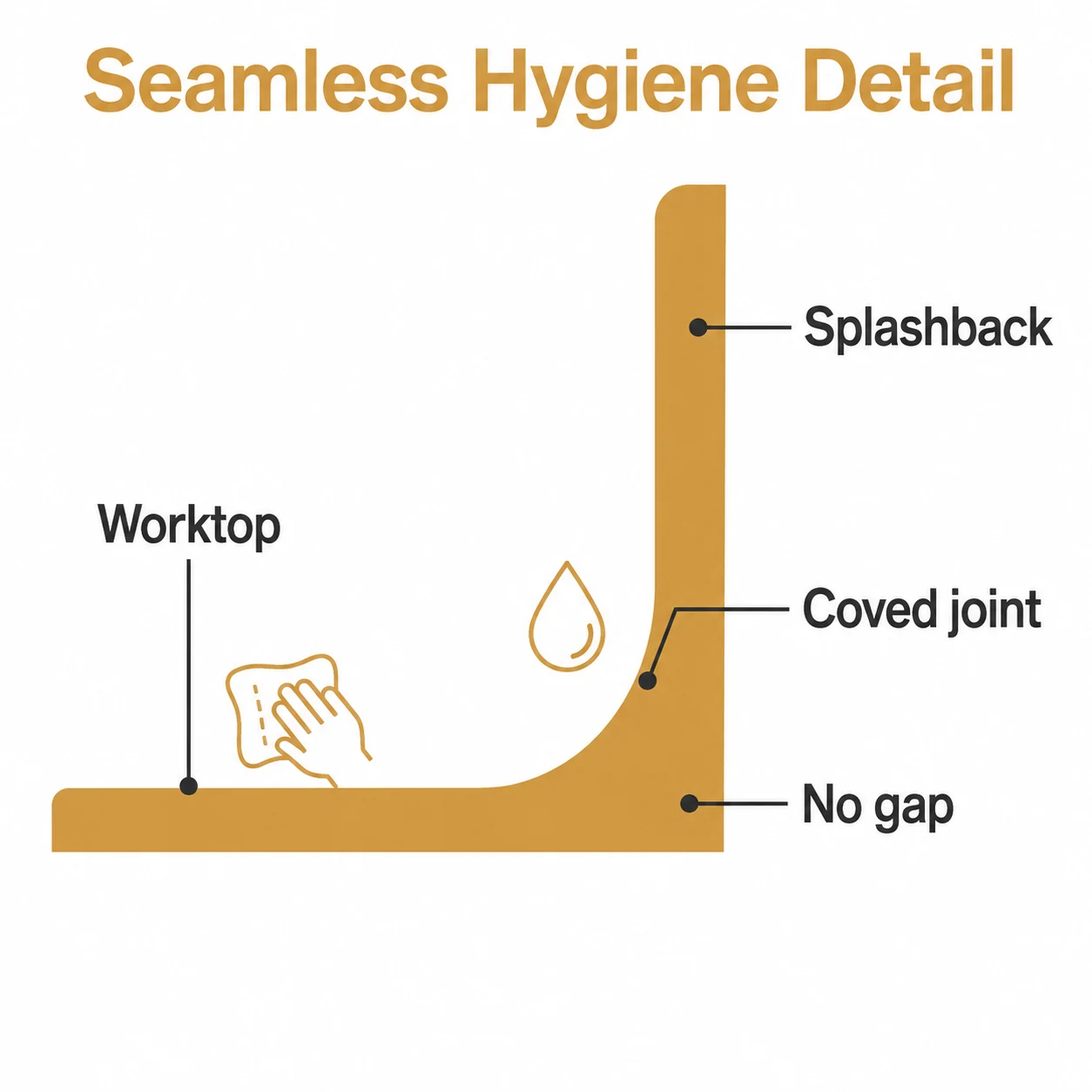
Kitchens are full of small junctions. The back of the worktop, the corner behind the sink, the space below wall units and the area around appliances all collect splashes, steam and residue. The easier these areas are to wipe, the easier the kitchen is to live with.
Solid surface is valued because it is non porous. That means the material itself does not readily absorb moisture in the way some more open materials can. For splashbacks and upstands, this is particularly helpful because the wall zone is exposed to water, cooking marks, soap, oils and general cleaning products.
The main benefit is not just the face of the material. It is the way the surface can be planned with fewer dirt catching breaks. A tiled splashback, for example, can introduce grout lines. A separate panel can leave a visible junction at the worktop. A carefully fitted solid surface upstand reduces those interruptions, which can make the area simpler to clean after cooking or washing up.
This does not remove the need for normal cleaning. No worktop material makes a kitchen look after itself. But a smooth, non porous surface with neat transitions gives you less fiddly detail to deal with. For busy homes and commercial interiors, that simplicity can be a significant advantage.
How solid surface supports a calmer design
Integrated splashbacks are also a design choice. When the worktop surface continues into the upstand or wall panel, the kitchen can feel more settled. There is less contrast between separate materials and fewer visual breaks at the back of the worktop.
This can be especially useful in kitchens where the cabinetry, flooring, taps, appliances and lighting already bring plenty of detail. A matching or coordinated splashback helps the worktop area read as one complete element rather than a collection of separate finishes.
Solid surface is particularly adaptable here because it can suit both simple and more detailed schemes. A subtle worktop can be carried up the wall for a quiet background. A stronger surface choice can be used in measured areas, giving the kitchen a clear focal point without needing extra decorative layers.
Another advantage is control. Upstands can be kept low for a restrained finish or taken higher where greater wall protection is useful. Full height splashbacks can be considered behind cooking or washing areas, while lower upstands may be enough along less exposed runs. This flexibility makes it easier to balance looks, cleaning and everyday use.
Where integrated splashbacks work best
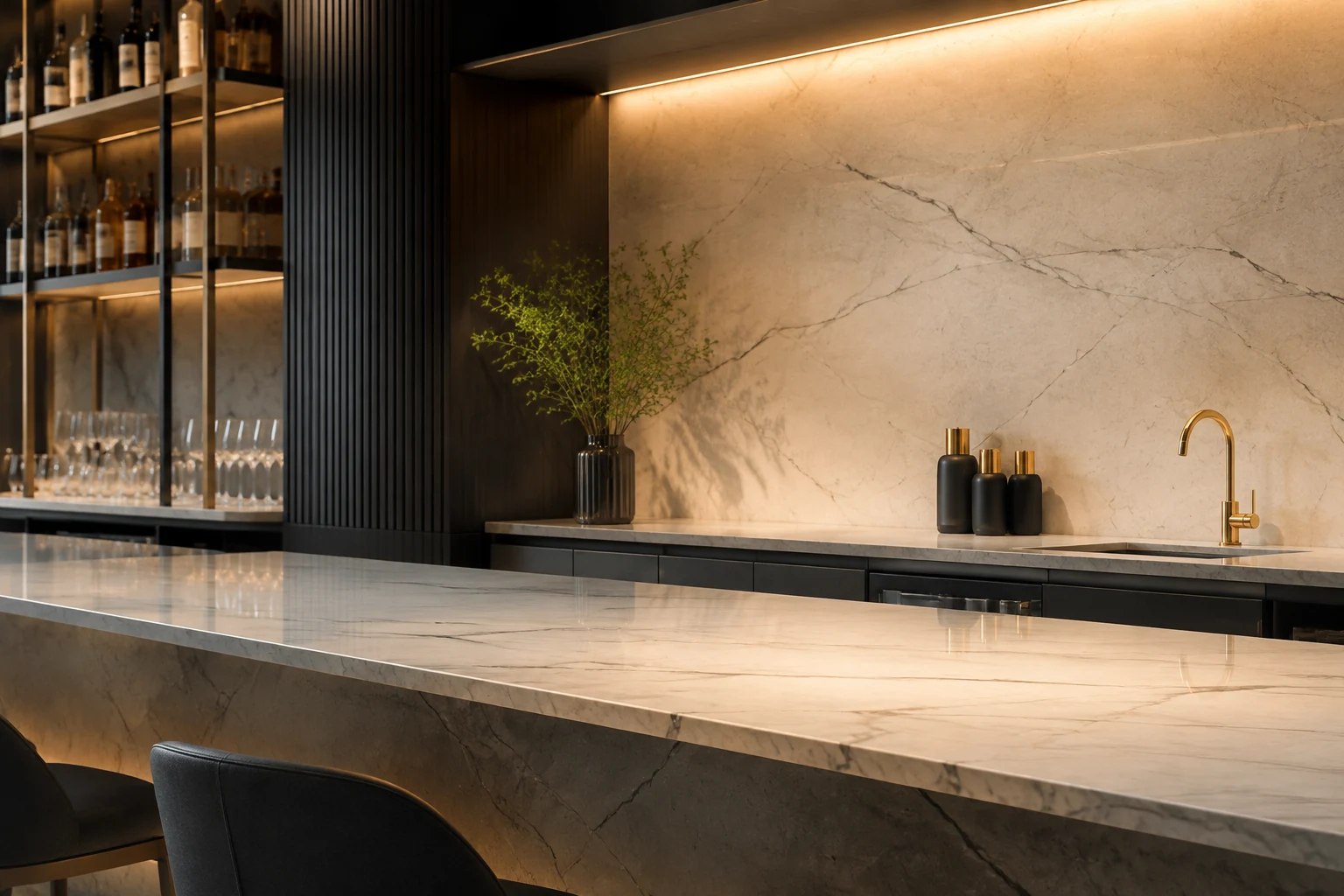
The most obvious place for an integrated splashback is behind the sink. Water, soap and regular wiping all affect this area, so a smooth surface with a tidy junction can be very practical. It also helps protect the wall from repeated splashes in a part of the kitchen that is used many times a day.
Cooking areas are another natural fit. Behind a hob or preparation zone, an integrated splashback can make cleaning simpler after food splashes or oil marks. As with any surface near heat, the design should respect appliance guidance and use suitable clearances, but solid surface can still play a strong role in the wider splashback plan.
Integrated upstands are also useful along long worktop runs where the back edge needs a finished detail. They can disguise minor wall variations, protect paintwork and create a neat line where the worktop meets the wall. In open plan kitchens, this small detail can make the overall installation feel more resolved.
For commercial counters, bars and service areas, the same logic applies. Surfaces that are easy to wipe, tidy at the edges and consistent across visible areas can support both daily maintenance and customer facing presentation. The design still needs to suit the setting, but the principle is the same, fewer awkward joins and a more controlled finish.
Important design decisions before you choose
Before specifying an integrated splashback, it is worth thinking through how the kitchen will actually be used. The right answer is not always the tallest splashback everywhere. A good design uses the material where it brings practical value and visual balance.
Start with splash zones. Sinks, hobs, coffee areas, utility spaces and food preparation runs usually need more protection than quiet worktop areas. Then consider the wall units, sockets, taps and appliances. These details influence the height, shape and finish of the splashback.
Colour and pattern also matter. A surface that looks calm on a horizontal worktop may feel stronger when it continues vertically. Samples should be considered in the context of cabinets, flooring and lighting, because the splashback catches the eye differently from the worktop.
Edge details should be discussed early too. The thickness of the upstand, the treatment of corners and the way the splashback finishes at open ends all affect the final impression. Solid surface gives plenty of scope for a neat result, but it works best when those details are designed as part of the overall plan.
It is also sensible to think about cleaning habits. If you prefer a quick wipe after cooking, a simpler vertical surface can make that routine easier. If the kitchen is used heavily, reducing small ledges and hard to reach corners can make a real difference over time.
Solid surface compared with other splashback choices
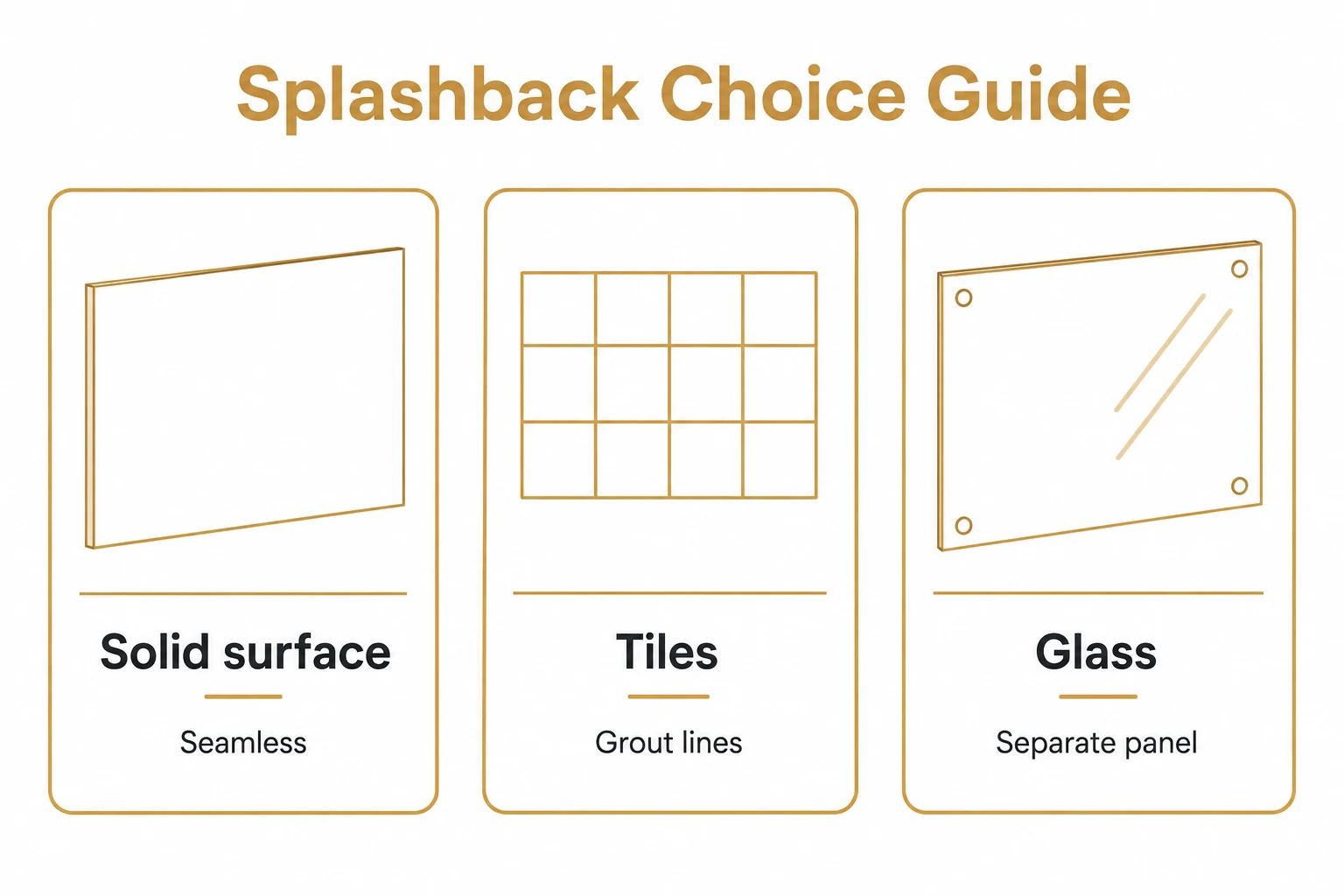
Tiles, glass, quartz, porcelain and stone panels can all be good splashback materials in the right setting. The reason solid surface deserves attention is the way it combines smoothness, shaping potential and repairable finish.
Tiles can bring character, but grout requires care. Glass can look crisp, but fingerprints and fixing details may be more visible. Natural stone and engineered stone can create a strong statement, but the look and jointing need careful planning. Solid surface sits in a useful middle ground for people who want a clean, quiet and practical finish.
One of its strongest qualities is that it can be renewed by a specialist if the surface becomes marked. Normal care still matters, and chopping boards and heat protection should be used as part of good kitchen practice. Even so, the ability to refresh the surface is reassuring in a space that is used every day.
The choice should always come back to the design brief. If the aim is dramatic contrast, another material may be preferred. If the priority is a smooth transition from worktop to splashback, easy cleaning and a composed finish, solid surface is often a very strong option.
- Solid surface worktops suit integrated splashbacks because the worktop and wall protection can be designed as one considered surface.
- Corian is non porous, which helps make splash zones easier to wipe and maintain with normal cleaning.
- Integrated upstands can reduce awkward junctions behind sinks, cooking areas and preparation spaces.
- Splashback height, edge detail, sockets, appliances and cleaning habits should all be planned before fitting.
- The best results come from balancing practical wall protection with a calm, well proportioned kitchen design.
Frequently asked questions
Are solid surface splashbacks easy to clean?
Yes, solid surface splashbacks are generally easy to clean because they are smooth and non porous. Most daily marks can be managed with routine wiping and suitable household cleaning products. The main advantage is the reduction of grout lines and awkward junctions where residue can gather.
Can Corian be used for both the worktop and the splashback?
Yes. Corian can be used across worktops, upstands and splashbacks, which makes it a good choice when you want a coordinated finish. The exact layout should be planned around sinks, hobs, sockets, wall units and the level of protection needed in each area.
Do integrated splashbacks have to be full height?
No. Some kitchens only need a low upstand, while others benefit from a taller splashback behind a sink, hob or preparation area. The best height depends on how the space is used and how much of the wall needs protection.
Is solid surface suitable near cooking areas?
Solid surface can be used as part of a cooking area design, but appliance guidance and sensible heat protection should always be followed. Hot pans should not be placed directly on the surface, and the layout should allow appropriate clearances around heat sources.
Plan a cleaner worktop detail
If you are considering Corian for a kitchen, bar, table or commercial surface, Stone Connection can help you think through the worktop, upstand and splashback details together.