
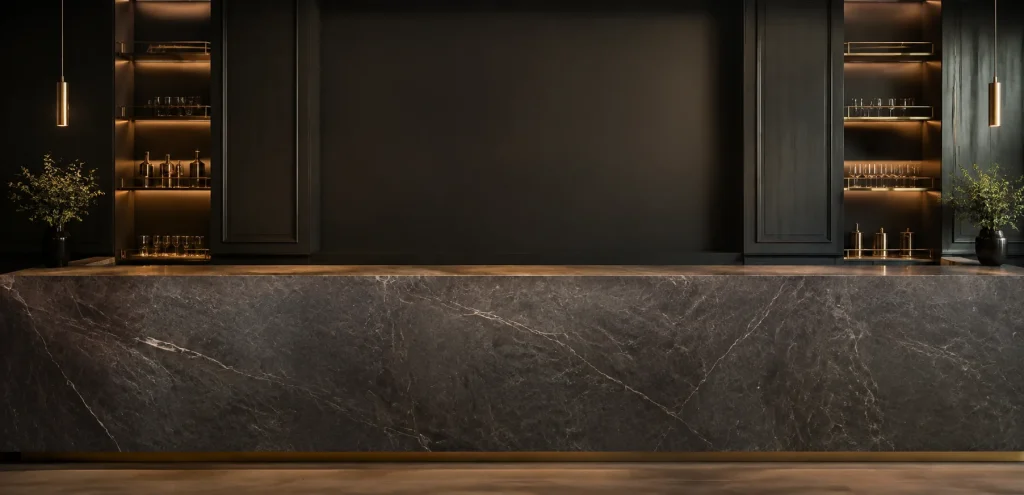
A bar counter has to work hard from the first pour to the final clean down. It is a serving surface, a customer touchpoint, a design feature and a practical workspace, often all at once.
Choosing stone for a bar is not only about picking a surface that looks impressive. The right choice balances durability, cleanability, edge detail, joint planning, lighting, installation and the way the counter supports the rhythm of service.
Start with how the bar will be used
Before comparing materials, think about what the bar counter needs to cope with each day. A cocktail led bar may need space for preparation, garnish trays, ice wells and frequent wiping. A drinks led venue may prioritise speed of service, spill resistance and a strong front of house impression. A hotel, members space or showroom bar may place more weight on finish, detail and the feel of the surface under softer use.
It helps to separate the customer facing surface from the working zones behind it. The front counter may need strong visual impact, carefully chosen veining and a refined edge. The staff side may need practical detailing around sinks, taps, glass washers, speed rails and service equipment. Both matter, but they do different jobs.
Stone Connection works across commercial stone worktops, tables and bars, so the same project can often bring together bar tops, table tops, service counters and back bar surfaces in a consistent material plan. That matters when the bar is part of a wider interior rather than a standalone counter.
Ask early questions such as:
- Will customers sit at the counter or mainly order from it?
- Will drinks be prepared directly on the stone?
- Where will water, citrus, alcohol, sugar syrup and cleaning products come into contact with the surface?
- Does the bar need a bold feature slab or a quieter surface that supports the wider design?
- Are there curves, mitred ends, waterfall sides or raised sections to allow for?
These answers guide the material, finish, thickness, edge and joint decisions. They also reduce the chance of choosing a surface purely from a small sample without considering real service conditions.
Choose a material that suits the level of wear
Bar counters face a different pattern of wear from many other commercial surfaces. They see repeated glass movement, wet patches, citrus, alcohol, till areas, bags, keys and leaning elbows. The surface needs to be resilient without losing the character that made it worth choosing in the first place.
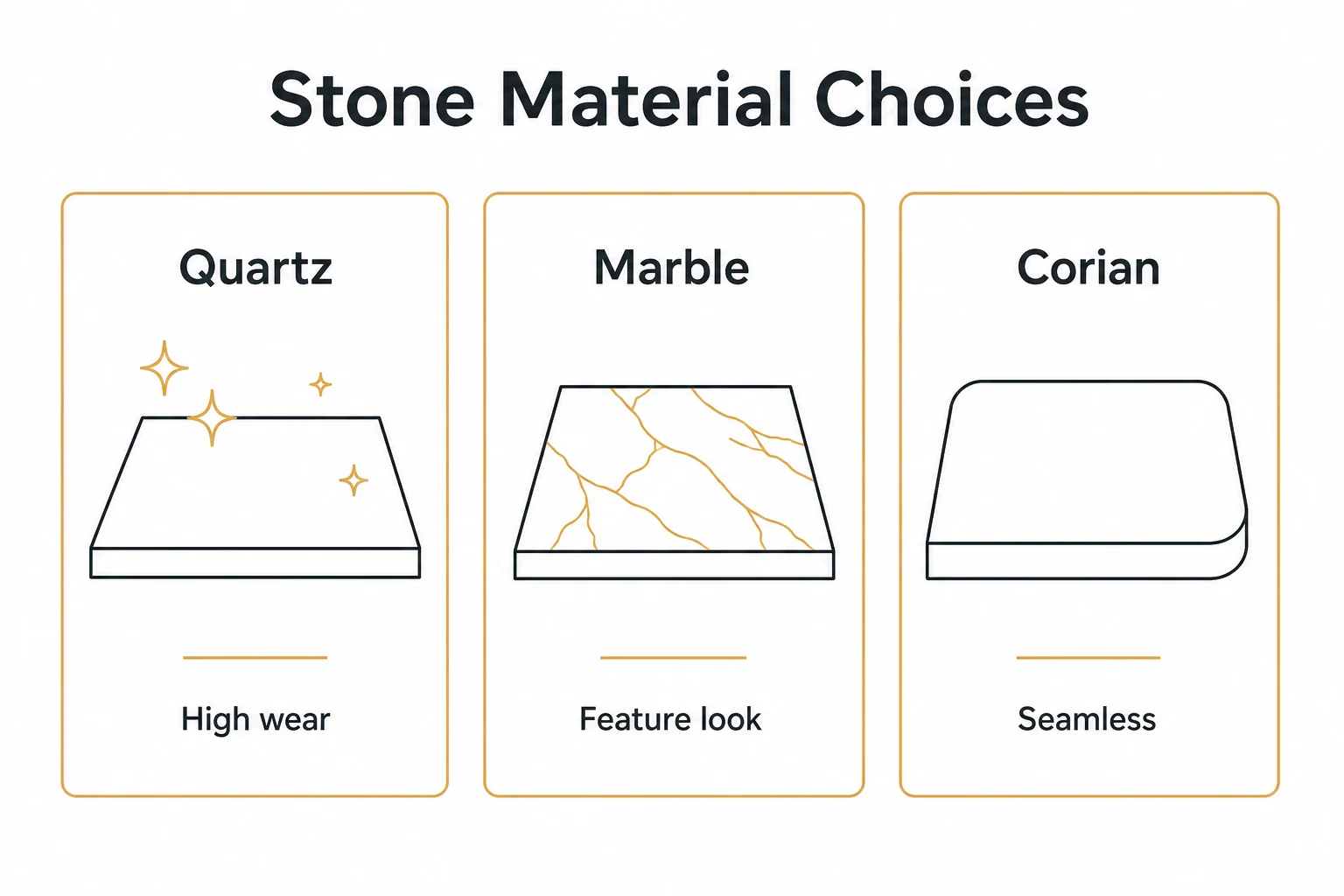
Quartz is a popular option because it offers a controlled, consistent appearance and strong everyday performance. It is non porous, easy to wipe and available in styles that range from simple plain tones to marble inspired veining. For many bar projects, quartz worktops give a good balance of practicality and design flexibility.
Porcelain and sintered stone surfaces are also worth considering where the bar needs excellent resistance to staining, heat and scratching. These materials can suit busy service areas, back bar sections and statement counters where a slim, crisp profile is wanted. Options such as Dekton, Neolith and Lapitec can provide strong technical performance with a wide choice of finishes.
Natural marble has a different appeal. It brings depth, variation and a sense of individuality that manufactured surfaces cannot exactly repeat. It can be beautiful for feature bars, private spaces and settings where patina is accepted as part of the material’s character. It does need more considered care than quartz or sintered stone, especially around acids such as citrus juice and wine.
Corian and other solid surface materials can be useful where seamless shaping, curves or integrated features are important. They do not have the same stone veining as marble or quartz, but they can solve design problems where joint appearance and form are central to the brief.
The best material is not always the hardest surface on paper. It is the one that fits the use, maintenance expectations, lighting, layout and design intent of the bar.
Think carefully about cleanability
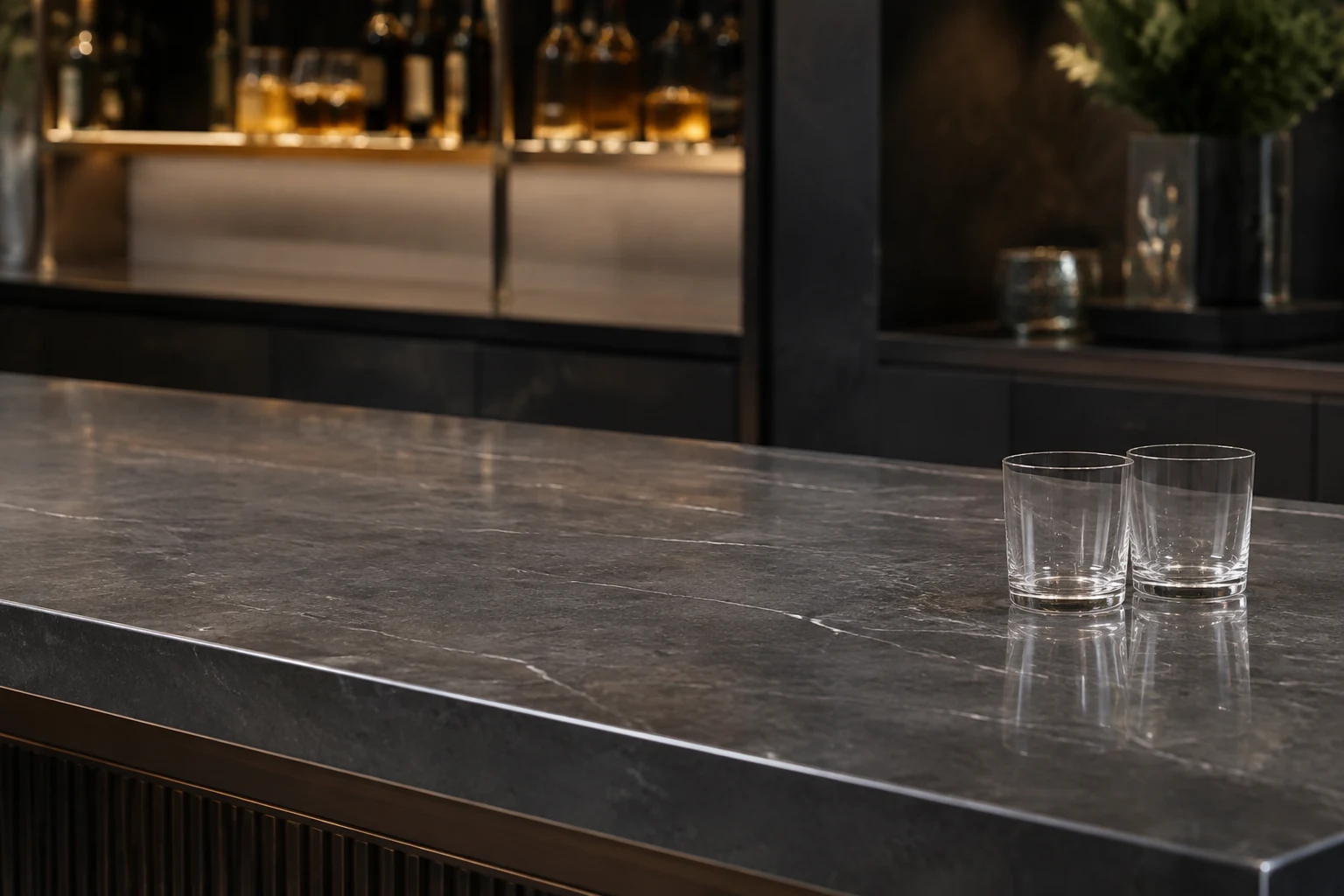
Cleanability is one of the most important buying criteria for a bar counter. The surface should support fast, regular cleaning during service and a more thorough clean at the end of the day. A beautiful material that traps dirt in awkward details or needs nervous handling will quickly become frustrating.
For most commercial bar settings, low porosity is a major advantage. Quartz, porcelain and sintered stone are generally easy to clean because spills remain on the surface rather than soaking in quickly. Natural stones vary, so advice on sealing, cleaning products and ongoing care should be part of the selection process.
The finish also matters. A polished surface can be easy to wipe and gives strong reflection and depth, but it may show fingerprints or smears more readily under some lighting. Honed, satin or textured finishes can soften the look, although some textures need more attention when cleaning sticky spills or dried residue. Samples should be judged under realistic lighting where possible.
Details around sinks, taps and equipment cut outs deserve close planning. Tight corners, awkward upstands and poorly considered joins can create places where residue gathers. A well templated bar top should allow staff to wipe down quickly without fighting the design.
Cleaning expectations should be simple and clear. Staff should know which products to use, which to avoid and how to deal with common spills. This is especially important with natural stone, where acidic or abrasive products can affect the finish. A good surface choice is supported by good guidance, not guesswork.
Use slab edges to shape the look and feel
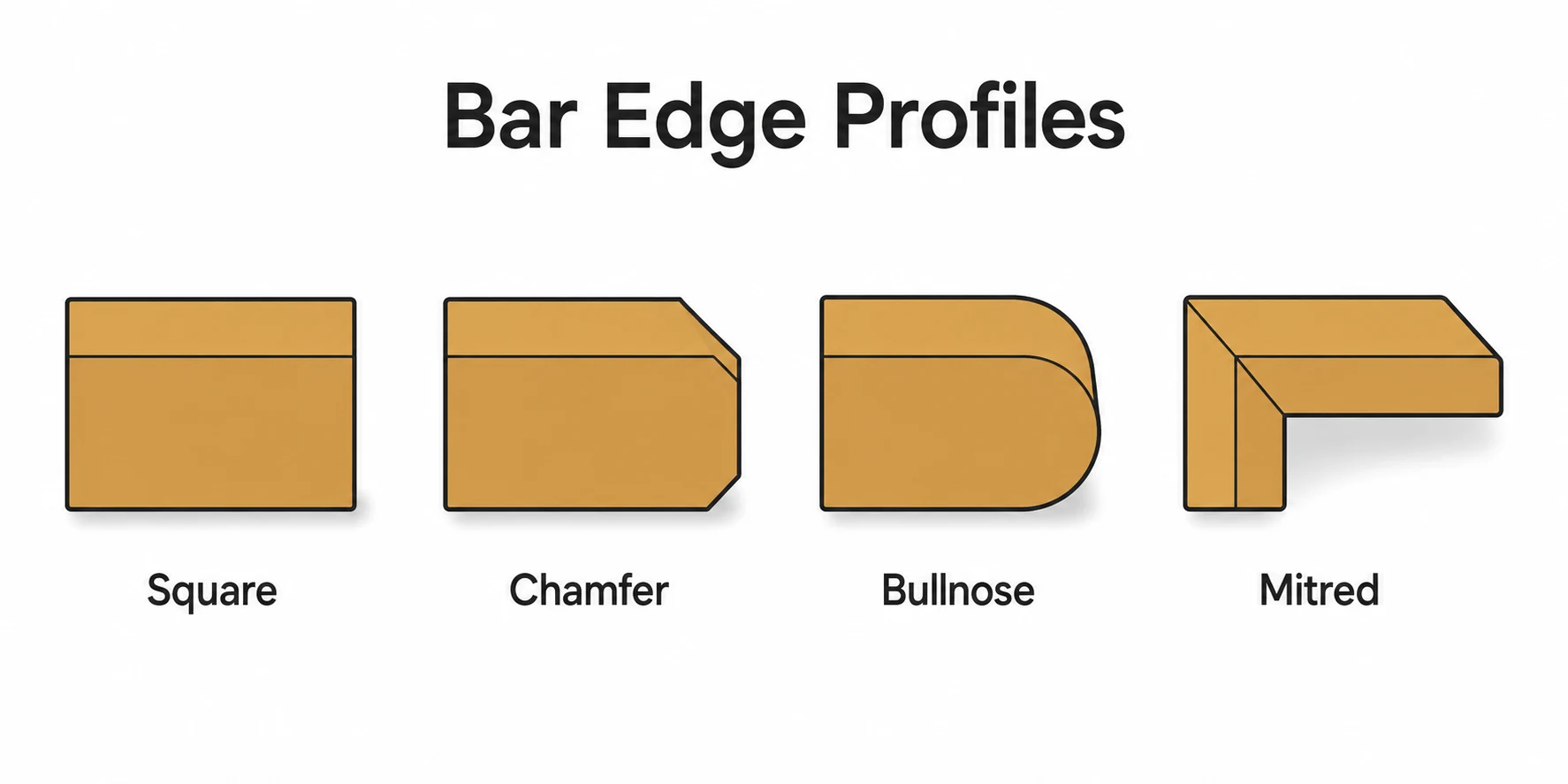
The edge of a bar counter is more than a finishing detail. It affects comfort, durability, perceived thickness and the way the counter sits within the interior. Customers notice it because it is the part they lean against, touch and see at close range.
A simple eased edge gives a clean, modern result and can work well where the material itself carries the visual interest. A rounded profile can feel softer at seated bars and may be more comfortable where people rest their arms. A bevel can catch the light and sharpen the outline. A mitred edge can create the look of a thicker slab without using a full thickness piece throughout.
For dramatic stone with strong veining, edge planning becomes even more important. The direction of the pattern, the position of joins and the treatment of returns all affect the final impression. On a bar, a poorly placed joint can interrupt the feature line exactly where customers look most closely. Careful templating and fabrication help the surface feel intentional rather than assembled.
Overhangs also need thought. A seated bar may need enough space for knees and stools, while a standing service counter may prioritise strength, support and staff access. The material, thickness and support method all influence what is sensible. This is a technical decision as much as a design one.
Edge details should be chosen with cleaning in mind too. Very ornate profiles can collect dust and residue more easily than simpler shapes. For many commercial bars, a crisp but practical edge gives the best balance of premium appearance and everyday usability.
Plan for visual impact without sacrificing function
A bar counter often anchors the whole room. Stone can bring pattern, depth, shine and a sense of permanence, but the strongest designs still respect how the bar has to operate.
Large scale veining can create a memorable feature, especially across a long counter front or a waterfall end. Subtler quartz or porcelain can create a calmer setting where lighting, joinery or back bar display takes the lead. Darker stones may feel dramatic, while lighter surfaces can make the counter feel open and precise. The right choice depends on the wider interior and the atmosphere the business wants to create.
Lighting changes everything. A slab that looks quiet in daylight can become far more reflective under evening lighting. A polished surface may create highlights, while a satin finish may feel softer. Samples should be viewed flat and upright if the design includes both horizontal surfaces and vertical cladding.
It is also worth considering how the bar surface relates to tables, counters and other commercial worktops nearby. Matching everything can feel calm and cohesive, but contrast can be more interesting when handled carefully. A feature bar top with more restrained table tops can give the space a clear focal point without making every surface compete.
If the bar is part of a wider hospitality fit out, it may help to compare the brief with guidance on stone worktops for cafes and restaurants. Bar counters have their own priorities, but the wider principles of durability, hygiene and service flow still apply.
Get the practical details right before fabrication
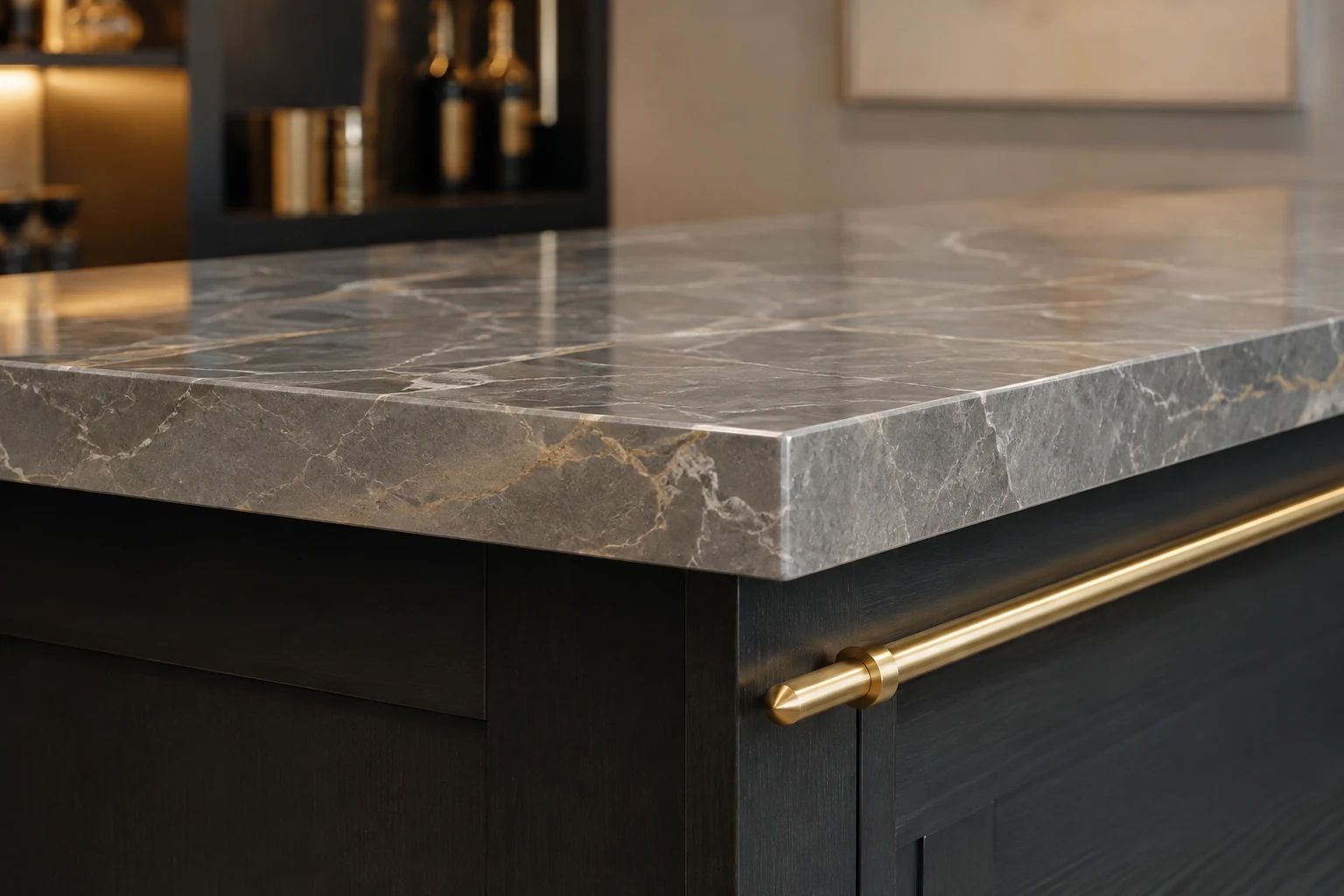
The success of a stone bar counter depends heavily on the decisions made before fabrication. Accurate templating, cut out positions, joint placement, access for installation and coordination with other trades all affect the finished result.
Equipment should be confirmed as early as possible. Sinks, taps, fonts, drip trays, glass washers, under counter fridges, power points and lighting can all influence the stone layout. Changes after templating can create avoidable complications, so final dimensions and product details matter.
Joint planning is especially important on longer bars. Sometimes a joint is unavoidable, but its position can often be chosen so it feels discreet and practical. The grain or veining of the slab should be considered alongside access routes, handling limits and the shape of the counter.
Support is another key detail. Stone is strong, but it still needs the right base, brackets or framing, particularly around overhangs, unsupported corners and cut outs. A bar with seating, leaning customers or heavy equipment should be planned as a working structure, not just a decorative surface.
Finally, ask for care advice that matches the chosen material. Quartz, sintered stone, marble and solid surface materials do not all want the same cleaning routine. Clear handover guidance helps the bar team look after the surface properly from day one.
- Choose the material around real bar use, not only the sample that looks best in isolation.
- Prioritise cleanability, low porosity and practical detailing around wet and service areas.
- Use edge profiles, slab direction and joint placement to improve both comfort and visual impact.
- Confirm equipment, supports and cut outs before templating so the finished counter works smoothly.
- A good bar surface should feel premium to customers and practical for staff every day.
Frequently asked questions
What is the best stone for a commercial bar counter?
There is no single best choice for every bar. Quartz is often a strong all round option because it is durable, non porous and easy to clean. Porcelain and sintered stone can suit demanding service areas, while marble is better for projects where natural variation and character are the priority.
Is marble suitable for a bar counter?
Marble can be suitable, especially for feature bars where its natural veining is central to the design. It needs more careful maintenance than quartz or sintered stone because acids and harsh cleaning products can affect the surface. It is best chosen with clear care expectations.
How thick should a stone bar counter be?
Thickness depends on the material, design, edge detail, support and whether the counter includes overhangs or seating. A mitred edge can create a thicker look, while the underlying structure provides the strength. This should be decided during design and templating.
Can a bar counter have a seamless look?
A seamless look is often possible in smaller runs, but longer bars may need joints. Good planning can make joints discreet by aligning them with the layout, choosing sensible positions and considering the slab pattern before fabrication.
Planning a stone bar counter?
Stone Connection can help you compare materials, edge details and practical options for a bar surface that looks impressive and works properly in daily service.