
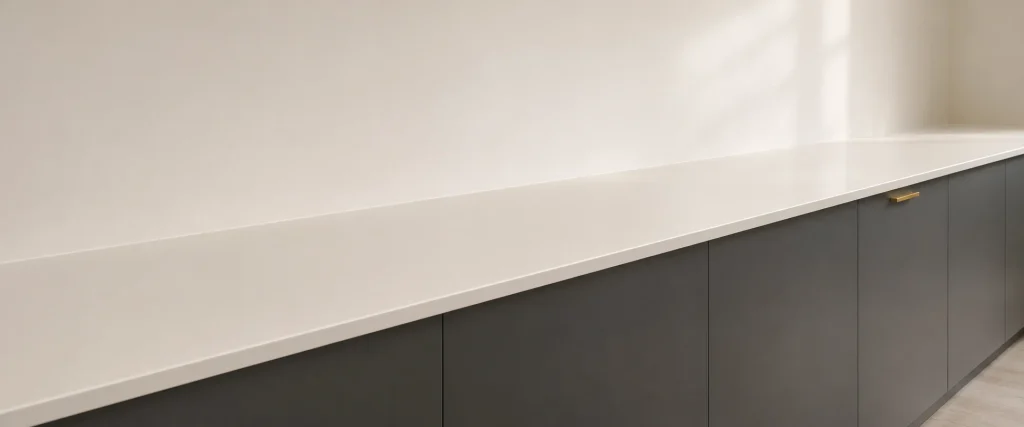
A long kitchen counter gives you generous preparation space, but it also raises a practical question: will the joins interrupt the finished surface? This matters particularly on islands, breakfast bars and extended runs where the worktop is a prominent part of the room.
Solid surface materials such as Corian offer a useful answer. Sections can be bonded and finished to create a smooth, continuous surface with discreet joins. The best results depend on more than the material alone, though. Colour choice, joint placement, support and careful fitting all play a part.
What seamless really means in a solid surface worktop
A seamless appearance does not necessarily mean a counter has been made from one piece. Long solid surface worktops are often assembled from separate sections, with joints prepared, bonded using a suitable adhesive and sanded to blend with the surrounding surface.
Corian is a solid surface material made from acrylic resin and mineral fillers. Its composition allows a fabricator to work across a bonded joint, rather than leaving the distinct joint line usually associated with separate stone slabs.
The aim is a visually discreet join, but not every joint will be invisible in every condition. Colour, pattern, finish and the direction of light can all affect what you notice. A joint that blends particularly well in a plain colour may be easier to identify in a design with pronounced movement.
If an uninterrupted counter is central to your plans, exploring Corian worktops helps you understand how bonded sections can create that effect. Discuss the finished appearance alongside the layout, rather than treating the join as a detail to resolve later.
Choose the colour and finish with joins in mind
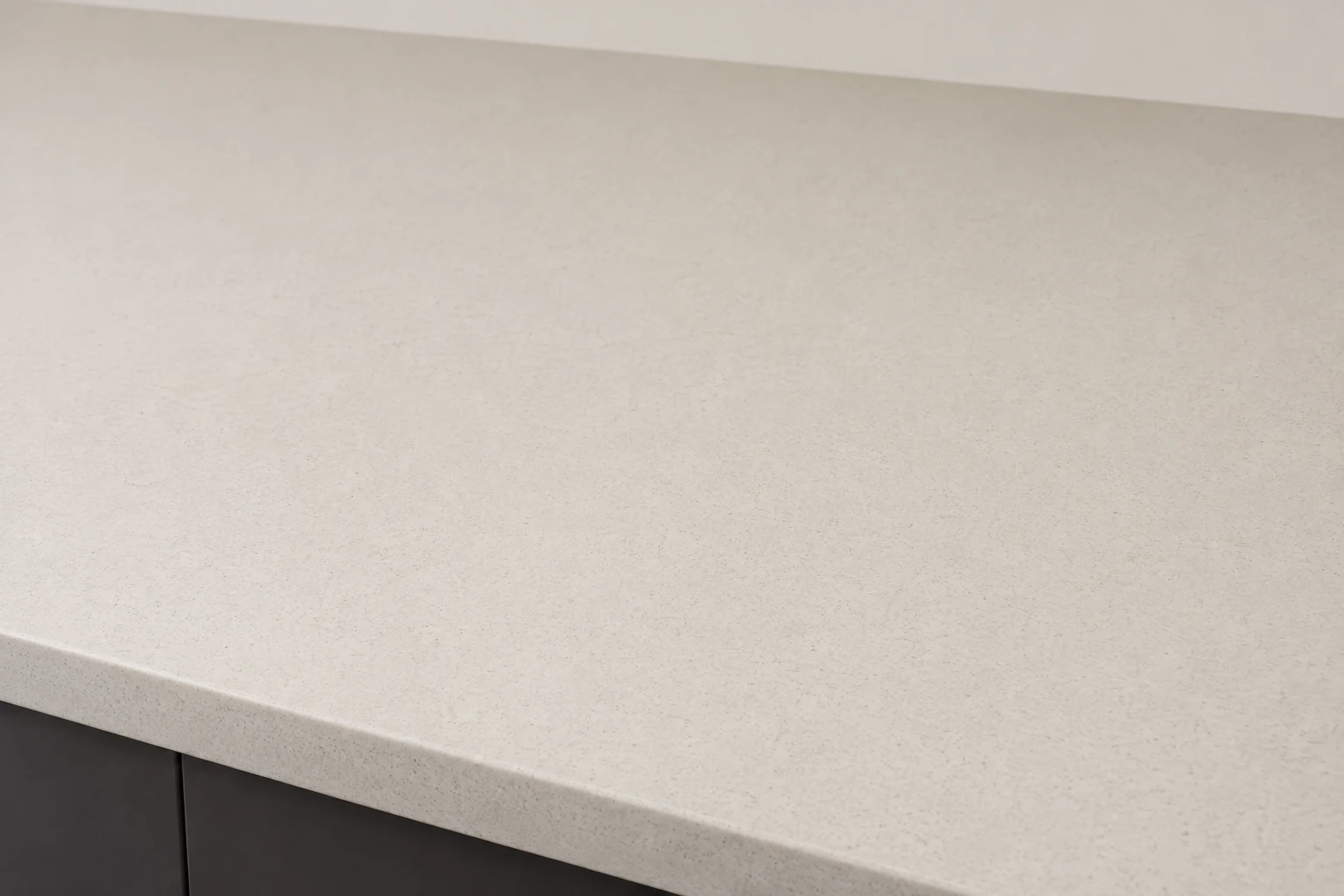
When a discreet joint is your priority, assess the surface pattern as carefully as the colour. A relatively uniform design generally gives a fabricator more scope to blend adjoining sections without an obvious change in appearance.
Veined and strongly directional designs need additional planning. The adhesive may blend neatly while the pattern changes at the joint, making the meeting point noticeable. This does not rule out patterned solid surface, but it makes section orientation and joint placement especially important.
Ask to see a joined sample where available. An unjoined sample shows the colour and texture, but cannot demonstrate how two sections will meet. Consider how the sample looks under lighting similar to your kitchen lighting, including light falling along the surface.
- Ask which colours are best suited to your expectations for discreet joins.
- Discuss how any veining or directional pattern will continue between sections.
- Choose an appropriate finish for the specific colour and intended use.
- Consider everyday wear as well as the appearance when newly fitted.
Darker colours and more reflective finishes can make fine scratches easier to see. A suitable finish helps balance the appearance you want with a practical maintenance routine.
Plan the joints around the whole counter
The right place for a join is not simply wherever two sheets happen to meet. A fabricator considers the shape of the counter, sheet dimensions, access into the property, cabinet layout and positions of sinks and appliances.
Some sections may be prepared in the workshop and bonded during installation. This allows a long finished run to be created from pieces that can be handled and brought into the room safely. The final arrangement should follow the material manufacturer’s fabrication guidance.
Sink and hob cutouts require particular care because they interrupt the surface and can introduce areas of stress. Joints need suitable positioning relative to these openings, with any required reinforcement and support incorporated into the design.
Before templating, confirm these details:
- The final cabinet arrangement and intended counter dimensions.
- The exact sink, hob and appliance models, including their installation requirements.
- Any seating overhangs or areas without cabinets beneath them.
- The preferred edge detail and any change in worktop depth.
- Access routes for bringing the sections into the room.
These decisions give the fabricator a clear basis for planning the counter. They also help keep the finished join away from avoidable sources of stress wherever the layout permits.
Why support and careful fitting matter
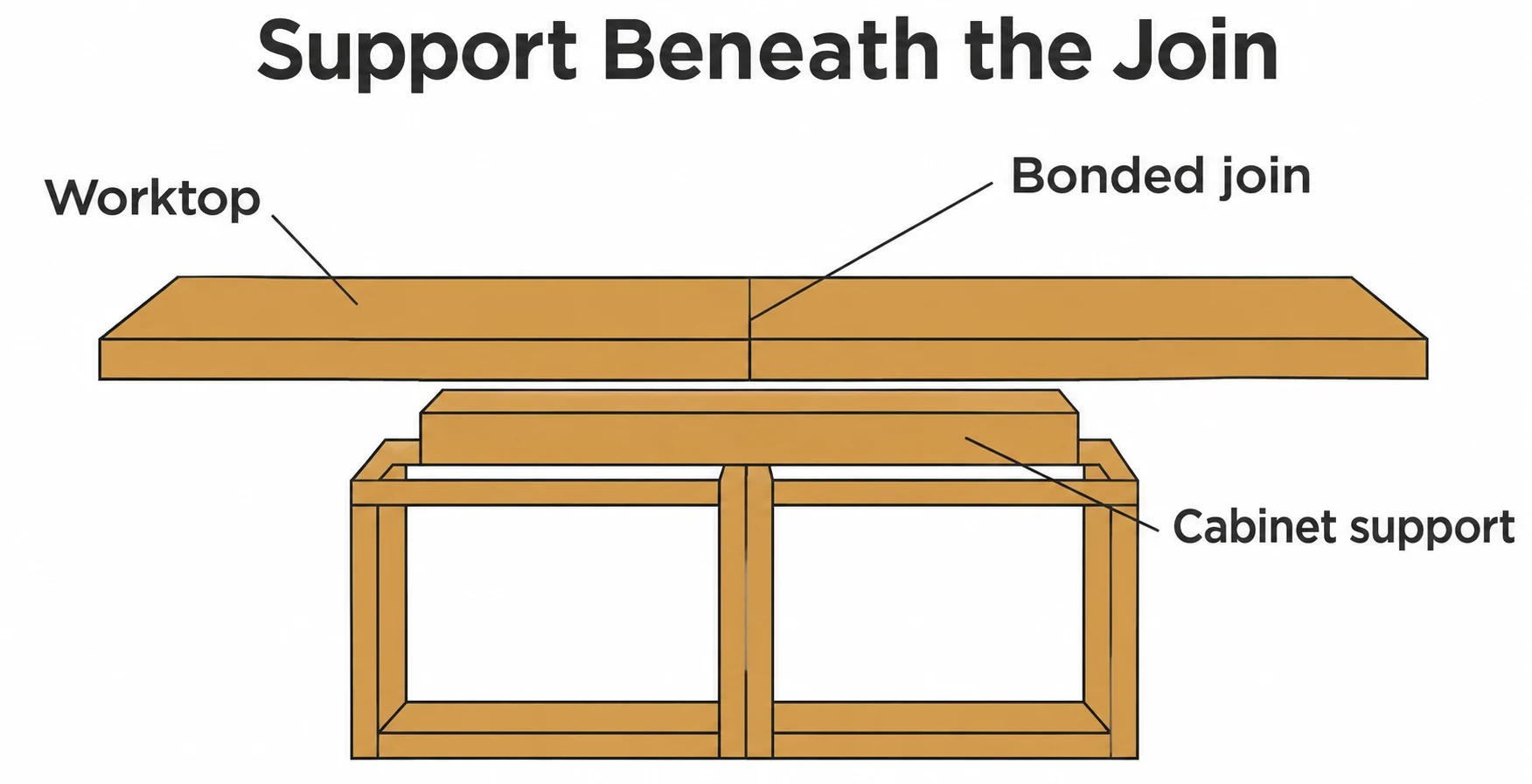
A well blended join needs a stable foundation. Cabinets should be secure, level and ready for templating and installation. The worktop must have the support specified for its thickness, layout and intended use, including suitable provision beneath joints and around openings where required.
Breakfast bars and seating areas deserve particular attention. An overhang may need additional support depending on its dimensions and construction. Deciding this early allows the support to become part of the furniture design while preserving comfortable seating space.
During fitting, accurately prepared edges are brought together with the appropriate adhesive and held in alignment while it cures. The joint is then finished to blend with the adjacent material. Consistent finishing across the surface matters as much as a neatly bonded edge.
Solid surface also needs allowance for movement as temperatures change. Appropriate clearances and fixing methods help the counter perform as intended. A seamless appearance should never mean forcing the material tightly between surrounding surfaces.
Ask how the proposed installation accommodates appliance heat, ventilation and movement. These practical details support a lasting result without changing the clean appearance that makes solid surface appealing.
Keep the finished surface looking consistent
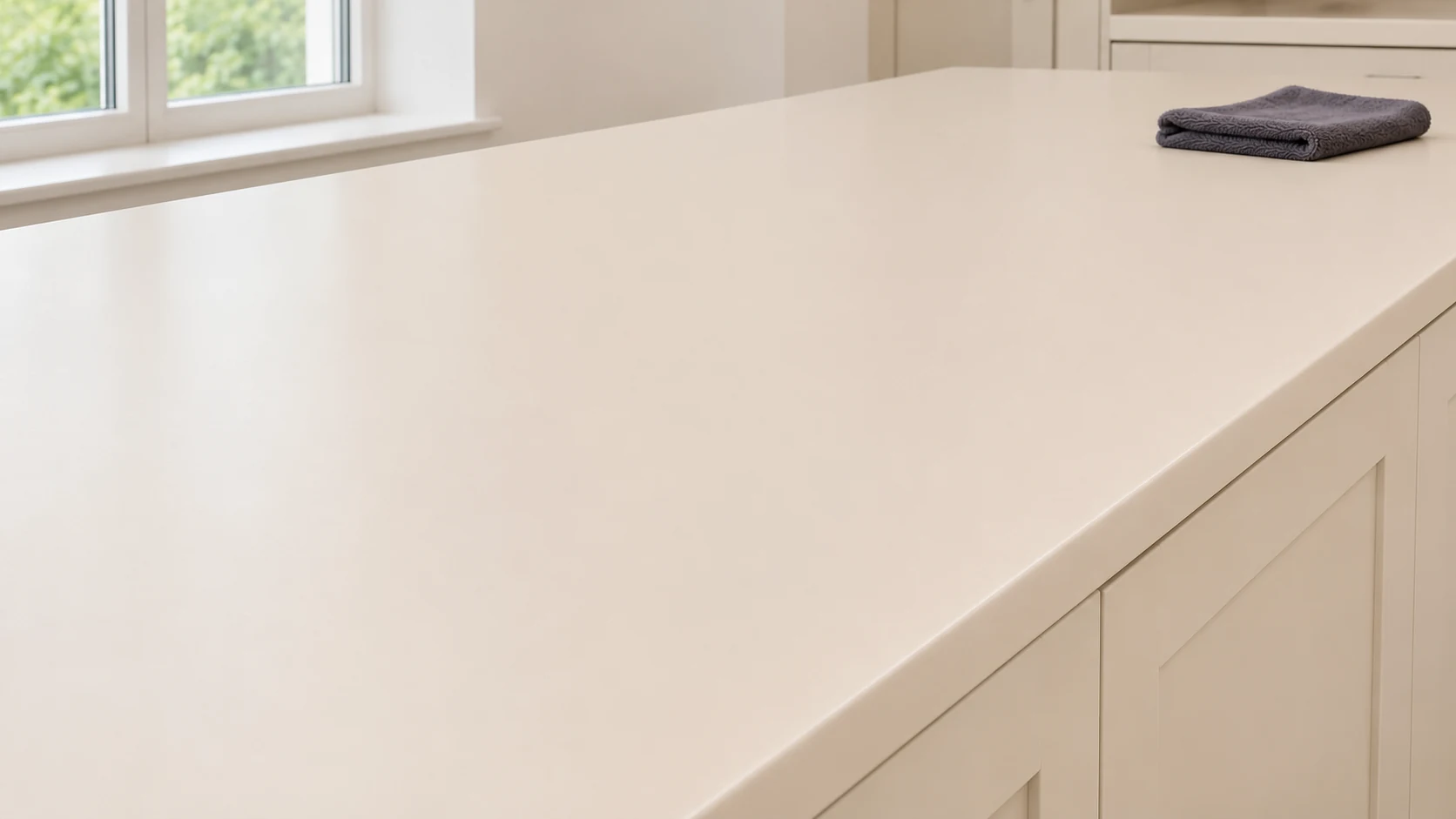
A properly finished bonded join should feel smooth, without an open gap that traps everyday debris. Corian is also non porous, making routine cleaning straightforward. Our guide to keeping non porous worktops clean explains why surface structure matters, although regular cleaning remains essential.
Follow the care guidance for your chosen colour and finish. Wiping up spills, rinsing away cleaning residue and drying the counter can help prevent uneven marks and deposits from affecting its appearance.
Use chopping boards rather than cutting directly on the surface, and protect it from hot cookware with suitable trivets or heat pads. Take particular care with appliances that release sustained heat onto the worktop, following both appliance and worktop guidance.
Solid surface can often be professionally refinished to reduce scratches and restore a more consistent appearance. Repairs may also be possible, depending on the damage. If a joint develops a visible crack or change in level, seek professional assessment rather than attempting a cosmetic fix. The underlying cause needs attention as well as the surface.
- Solid surface sections can be bonded and finished to create discreet, smooth joins.
- Colour, pattern and lighting influence how visible a joint appears.
- Plan joints alongside cutouts, access, cabinet support and appliance requirements.
- Correct fitting and everyday heat protection help preserve the finished counter.
Frequently asked questions
Will a join in a Corian worktop be completely invisible?
It can be very difficult to spot, particularly in a suitable plain colour, but complete invisibility is not guaranteed. Pattern changes, lighting and finish can reveal the meeting point. A joined sample is useful when setting expectations.
Can a long island look like one continuous worktop?
Yes. Separate solid surface sections can be bonded and finished into a continuous counter. The design still needs appropriate support, planned joint positions and provision for any sink or hob openings.
Does a bonded worktop join need regular sealing?
A correctly fabricated Corian joint does not need routine sealing like some natural stone surfaces. Follow the recommended cleaning guidance and ask for an assessment if a joint opens, cracks or changes in appearance.
Can an existing solid surface joint be repaired?
Repairs are often possible, but the approach depends on the material, colour and cause of the problem. A fabricator should inspect the joint and supporting furniture before recommending repair and refinishing.
Plan a counter that flows
If you are considering a long worktop, Stone Connection can help you explore Corian and discuss how colour, layout and fitting affect the finished joins. Bring your plans and questions to start the conversation.