
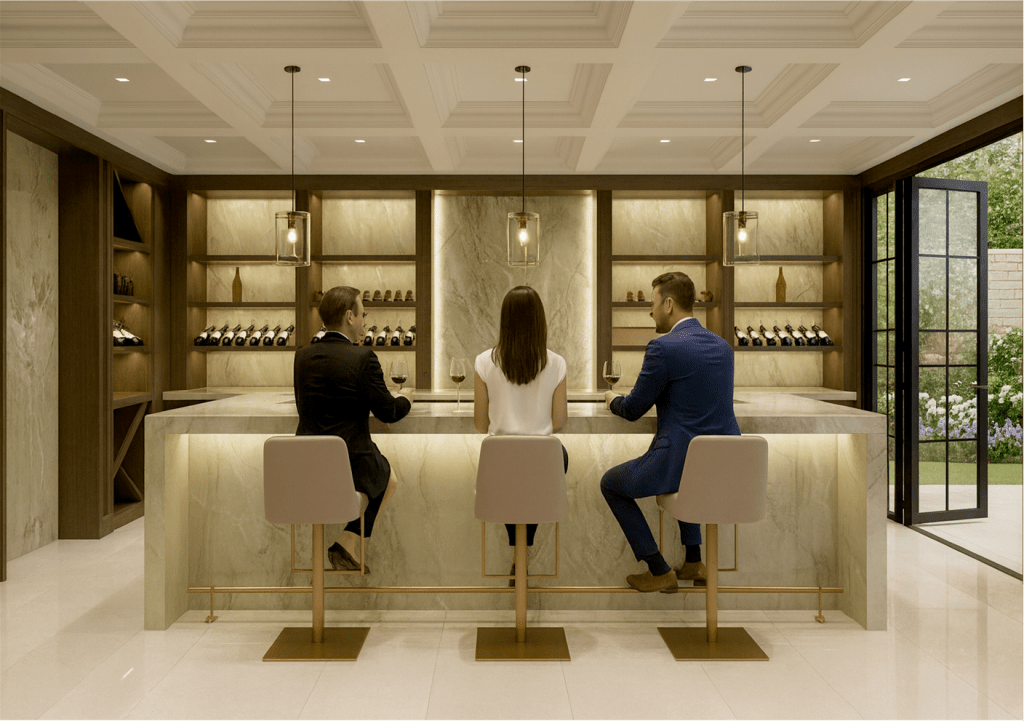
If you’ve ever watched a coffee station during a Saturday rush, you’ll know why “commercial worktop” is a different conversation to “kitchen at home”.
It’s heat, spills, sanitiser sprays, heavy kit, trays sliding about, and the occasional clumsy knock when someone’s trying to do three things at once.
So the real question isn’t “what looks nice?” (although that matters). It’s what still looks decent after months of service.
Below is a practical look at the stone surfaces that tend to cope best in cafés and restaurants, where they work well, and the little design choices that often decide how long a worktop lasts.
What heavy use actually looks like in hospitality
“High use” can sound vague, so let’s be specific. In a busy venue, your surfaces are dealing with:
- Constant wiping: disinfectants, sanitisers, and “quick clean” sprays used all day.
- Heat zones: hot cups, warming plates, toasters, heat lamps, coffee machines, and the odd pan that gets put down without thinking.
- Acids and dyes: lemon, vinegar, tomato, red wine, curry, berry syrups, turmeric, and coffee oils.
- Impact and abrasion: plates stacked, trays dragged, stock deliveries nudging corners, and staff leaning on edges.
- Weak points: cut outs for sinks and taps, joins near the till, and corners where people cut across the space.
What to prioritise before you pick a material
Most issues people blame on “the stone” are really a mismatch between the material and the way the space is used.
If you want fewer regrets, prioritise in roughly this order:
- Hygiene and stain resistance for everyday spills and fast cleaning routines.
- Edge and corner durability because that’s where damage usually shows first.
- Heat tolerance in the places it genuinely matters, like a kitchen pass or hot holding area.
- Repair and maintenance reality based on what your team will actually do on a busy shift.
- Looks over time meaning how it handles water marks, dulling, and scuffs in real life.
Best performing options for cafés and restaurants
Quartz engineered stone
Quartz is often the “workhorse” choice for front of house counters and barista stations.
It’s generally low porosity, easy to wipe down, and consistent in colour and pattern, which is handy if you’re trying to match a brand aesthetic across multiple sites.
For a lot of cafés, that practicality is the point.
Where you need to be a bit careful is direct heat. Quartz can cope with hot drinks and daily warmth, but placing very hot pans straight on the surface is a different situation.
In a commercial environment, that usually means thinking about where hot kit is put down and adding simple protection where needed.
If you’re browsing options, Stone Connection has a dedicated page for quartz work surfaces.
Granite
Granite tends to suit busier, more physical environments. It’s a natural stone, so you get a unique look, and it usually handles knocks and heat better than many people expect.
That said, not all granite behaves the same. Some colours and slabs are more absorbent than others, so sealing and aftercare can matter more than the name “granite” suggests.
Granite can be a strong choice for kitchen passes, back of house counters, and areas where hot items might be placed down without warning.
Stone Connection’s granite work surfaces page is a useful starting point for what’s available.
Ceramic and sintered porcelain
If your space is hard on surfaces, ceramic and sintered porcelain can be very appealing.
These materials are often chosen for strong heat resistance, stain resistance, and a “clean” look that doesn’t show wear as quickly.
They can work brilliantly for bar tops, high traffic serving counters, and even outdoor serving areas if that’s relevant to your setup.
Fabrication quality matters here. Edges and corners need to be designed sensibly, and the support underneath must be right.
If you’re exploring branded surfaces, you might look at options like Dekton, Neolith, or Lapitec.
Solid surface options such as Corian
Solid surface materials can be a good fit in the right places, especially if you want near seamless joins or integrated details.
For customer facing counters where you want a sleek, continuous look, it’s a strong option.
The trade off is that it can be more prone to surface scratching in very busy environments, and it doesn’t love high heat.
If the seamless look is what you’re after, see Corian.
A quick comparison for busy hospitality spaces
| Material | Best suited areas | Strengths | Watch outs |
|---|---|---|---|
| Quartz | Barista stations, front counters, bars | Easy cleaning, consistent appearance, good stain resistance | Protect from very high heat, plan cut outs carefully |
| Granite | Kitchen pass, back of house, high impact zones | Strong and durable, generally good with heat, unique look | Some slabs need sealing and sensible aftercare |
| Sintered porcelain | Bars, serving counters, open kitchens, outdoor use | Heat and stain resistance, hygienic feel, holds colour well | Edge design and support are crucial |
| Solid surface | Reception style counters, display counters | Near seamless joins, design flexibility | Can scratch in heavy use, avoid direct heat |
| Marble and softer stones | Statement bar fronts, low risk feature areas | Beautiful, premium look | Can etch with acids, can show wear quickly |
One honest note: marble can look incredible in hospitality, but it’s usually best treated as a statement choice rather than a “punishment proof” one.
If it’s your dream look, you’ll want tighter cleaning routines and staff awareness.
The details that decide how long it lasts
In practice, longevity is often decided by design, fabrication, and installation details rather than the material alone.
A few things that tend to make the biggest difference:
Edge profiles and corners
- A small radius edge often copes better than a sharp, square edge in busy walkways.
- Rounded external corners are less likely to chip when trays and deliveries swing past.
- Waterfall ends can look great, but they should be planned with corner protection in mind.
Cut outs and weak points
- Pop up sockets and sink cut outs need proper reinforcement, especially on thinner tops.
- Where possible, avoid putting joins right at the highest wear spots, like the till point or the dish drop.
- If you have a coffee machine, think about drip trays, drainage routes, and where milk and syrup spills actually happen.
Overhangs and support
Breakfast bar style seating in cafés looks great, but unsupported overhangs are where cracks and chips can start.
If you’re planning seating or a serving ledge, factor in brackets, subframes, or other support from day one.
Upstands and splashbacks
A small upstand or splashback detail can reduce water getting behind cabinets, and it makes cleaning faster.
In a commercial setting, that’s not a tiny benefit. It’s minutes saved every day.
Cleaning and maintenance that staff will actually follow
The best surface in the world won’t look good if the cleaning routine is unrealistic.
Aim for a simple approach that’s easy to train and repeat.
Also, if you’re using stronger chemicals, it’s worth checking product guidance under your normal COSHH process and doing a small test in an inconspicuous area.
Daily routine
- Warm water and a mild cleaner, applied with a microfibre cloth.
- Wipe spills sooner rather than later, especially coffee, wine, citrus, and curry style sauces.
- Rinse away cleaning residue so it doesn’t dry as a film.
What to avoid
- Abrasive pads used “just for this one mark”. They add up.
- Leaving strong chemicals sitting on the surface during a rush clean.
- Using knives directly on the worktop. It dulls blades and marks surfaces, even tough ones.
If your venue has a coffee station, you’ll often find that milk residue and syrup drips cause more day to day mess than “big spills”.
A quick wipe habit there keeps surfaces looking fresh.
Cost versus value in a commercial setting
It’s tempting to look at material cost alone, but hospitality has an extra factor: downtime.
If a worktop has to be repaired or replaced, it can disrupt service, affect hygiene routines, and create a lot of admin.
Paying a little more for the right material, plus good fabrication and installation, can be the cheaper option over five to ten years.
Quick recommendations by zone
- Barista station: quartz or sintered porcelain with sensible edge detailing.
- Bar top: quartz or sintered porcelain for stain resistance and easy wipe downs.
- Kitchen pass: granite or sintered porcelain, especially if hot plates are involved.
- Back of house prep: granite or quartz, depending on heat exposure and cleaning products.
- Outdoor serving counter: sintered porcelain is often a safer bet for UV and weather.
How Stone Connection can help with commercial worktops
If you’re fitting out a café, restaurant, bar, or refurbishment project, it’s usually worth speaking to a fabricator early,
before the layout gets locked in. Small decisions about joins, cut outs, and support can save a lot of hassle later.
Stone Connection works with commercial projects including commercial stone worktops, tables, and bars,
and can help with material selection, templating, fabrication, and installation.
If you’ve got plans, drawings, or even a rough sketch, you can start the conversation via the contact page.
If you want to browse options first, the main work surfaces section is a good place to compare materials and finishes.